Originally published on December 21, 2016, Updated on September 21, 2024.
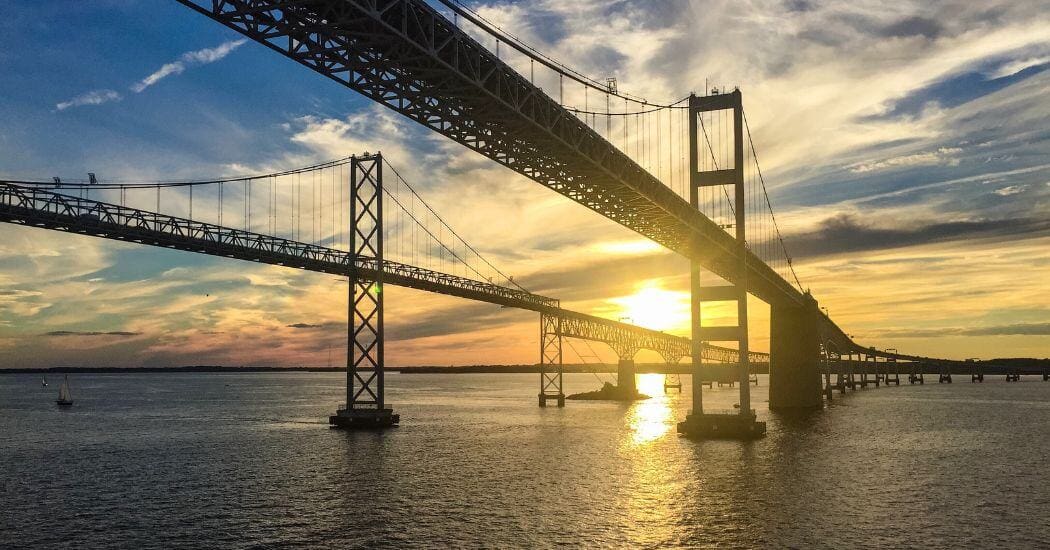
The Chesapeake Bay Bridge-Tunnel It is undoubtedly an engineering marvel, a flagship of innovation in maritime infrastructure.
The Chesapeake Bay Bridge-Tunnel, an engineering marvel
In the World Oceans Day, celebrated every June 8, gives us the opportunity to reflect on the vital importance of these vast bodies of water for life on our planet. The oceans are not only a source of biodiversity and natural beauty, but also of resources that are essential for human survival, and that is why, Maritime infrastructure plays a crucial role by facilitating connectivity and exchange between regions, boosting trade, the economy, and sustainable development. Among these engineering marvels, the Chesapeake Bay Bridge-Tunnel, an engineering feat that combines the functionality of a bridge with the efficiency of a tunnel, marking a milestone in the history of maritime infrastructure construction.

Marine extension of the Chesapeake Bay Bridge-Tunnel. Britannica
The Chesapeake Bay Bridge-Tunnel
The Chesapeake Bay Bridge-Tunnel It is an engineering marvel located on the East Coast of the United States, connecting the cities of Virginia Beach and Norfolk in the state of Virginia. It was built in the 1960s, when the need to improve connectivity between the Delmarva Peninsula and the Virginia mainland became apparent. Before this bridge-tunnel was built, crossing the Chesapeake Bay It meant long detours or long wait times to board ferries, which hindered traffic flow and the economic development of the region.
Designed by the Danish engineer Ole Singstad, the Chesapeake Bay Bridge-Tunnel stands as a testament to human ingenuity and technological innovation in the field of civil engineering. With a total length of approximately 28 kilometers, this unique transportation system combines conventional bridge sections with submerged sections that function as tunnels, allowing traffic to pass both above and below the water. This integration of structural elements, combined with its ability to withstand adverse weather conditions and Atlantic tides, making it an outstanding example of maritime infrastructure on a global scale.
The Challenge of Building Underwater Tunnels
One of the most significant challenges faced by the Chesapeake Bay Bridge-Tunnel project was the considerable depth of the seabed in certain areas of the bay. This depth posed a considerable obstacle to the construction of the submerged tunnels, since required specialized techniques and technologies to work in extreme underwater conditions. Addressing this challenge required the development of innovative construction methods, such as the use of prefabricated concrete boxes that were submerged and positioned with millimeter precision.
In addition, Advanced pumping and drainage systems were required to keep the work area dry during construction, as well as underwater engineering techniques to ensure the stability and durability of structures in a hostile marine environment. Overcoming these challenges not only demonstrated the the technical and creative abilities of the engineers and workers involved, ...but he also emphasized the importance of interdisciplinary collaboration and innovation in solving problems in large-scale infrastructure projects.
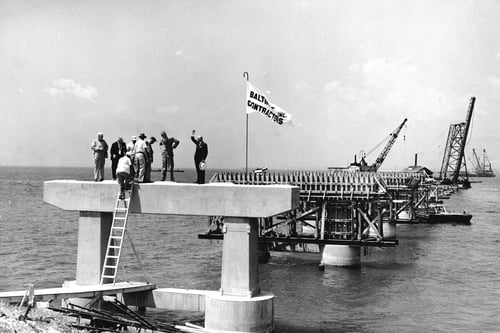 Photograph of the construction of the Chesapeake Bay Bridge-Tunnel. Baltimore Magazine
Other examples of infrastructure, such as the Chesapeake Bay Bridge-Tunnel
The Chesapeake Bay Bridge-Tunnel stands out as an iconic example of maritime engineering, but it is not the only one of its kind in the world. Other equally impressive projects include the Øresund Bridge-Tunnel, which connects Denmark and Sweden across the Øresund Strait, combining bridge sections with an underwater tunnel nearly 4 kilometers long. In addition, the Seikan Tunnel Japan is another notable example, as the world's longest undersea tunnel, stretching more than 53 kilometers which connects the islands of Honshu and Hokkaido.
In China, The Danyang-Kunshan Grand Bridge, which spans the Yangtze River, is another landmark of modern engineering. With a total length of more than 164 kilometers, it is the longest bridge in the world and also features undersea tunnels in their design. These projects demonstrate engineering's ability to overcome geographical and maritime challenges, facilitating connectivity between regions and promoting economic and social development on a global scale. Continuous innovation in the field of maritime infrastructure promises to continue inspiring future projects that redefine the limits of what is possible in the construction of transoceanic and underwater links.
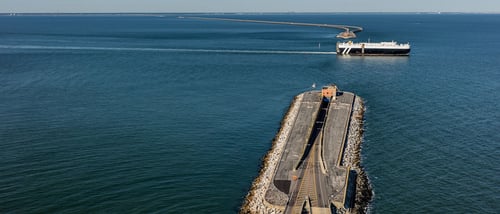
Underwater section of the Chesapeake Bay Bridge-Tunnel. CBBT
In conclusion, the Chesapeake Bay Bridge-Tunnel is today a symbol of the human capacity to overcome geographical and maritime challenges through innovation and cutting-edge engineering. In an increasingly interconnected world, infrastructure like this not only facilitates transportation and trade, but also promotes the economic and social development of the regions it connects. It is crucial to recognize that Carrying out projects of this magnitude requires a constant commitment to training and staying up to date with the latest technologies by the engineers. In this World Oceans Day, let us remember the importance of preserving these ecosystems as we move toward a future of more sustainable and innovative infrastructure.
We invite our readers interested in the engineering of these megastructures to Explore the catalog of civil engineering courses and master's programs offered Structuralia, an educational platform that provides the tools needed to prepare for tomorrow's challenges in the field of engineering. Together, we can build a safer and more prosperous future, both on land and beneath the waves.