On November 20, as part of the African Industrialization Day, it is essential to reflect on how infrastructure can be a a driving force for development on the continent. A notable example of this is the El Hachef Viaduct, a monumental engineering project that not only symbolizes the technological progress in Morocco, but it also marks a milestone in Africa's ability to undertake world-class infrastructure projects. A project of this magnitude has the potential to transform socioeconomic dynamics, promoting growth, connectivity, and sustainable development throughout the region.
The El Hachef Viaduct, located in Morocco, is a a key component of the rail corridor that will connect Tangier with Casablanca, dramatically improving logistics and transportation in the country. This viaduct, which is approximately 3.5 kilometers, is an ambitious project that aims not only to facilitate the movement of goods and people, but also position Morocco as a hub a leading logistics provider in Africa. The construction of the El Hachef Viaduct is a testament to Morocco's commitment to developing robust and modern infrastructure, which is essential for the industrialization of the country and the continent as a whole.
What makes the El Hachef Viaduct particularly innovative is the use of the pushed-bridge methodology, a technique that allows for the efficient construction of large structures in a segmented and controlled manner. This project stands out not only for its scale but also for the cutting-edge technology used in its development. The choice of this methodology responds to the need to minimize the environmental impact, reduce costs, and ensure safety throughout the construction process.
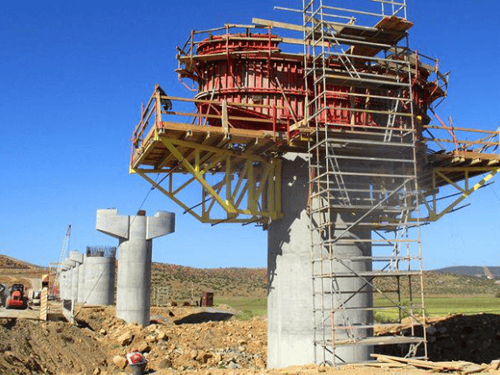
Hachef Viaduct. Source: buqueland
Pushed-Bridge Methodology: An Innovative Solution
The pushed-bridge method, or Incremental Launch Methodology (ILM) is a technique that has become widely used in the construction of viaducts and bridges around the world due to its many advantages. In this method, The bridge is built in sections on dry land and then pushed horizontally onto the piers. until it reaches its final position. This process is repeated until the entire structure is in place. The use of this technique on the El Hachef Viaduct allows for a greater precision in construction, since each segment is prefabricated under controlled conditions, thereby minimizing errors and optimizing the quality of the final result.
Another significant advantage of the pushed-bridge methodology is the reduction of environmental impact. When constructing the segments outside riverbeds and other sensitive areas, Environmental risks are minimized and natural environments are preserved. In the case of the El Hachef Viaduct, this methodology has also made it possible to address The Challenges of the Moroccan Terrain, which is characterized by its geological and topographical complexity, in an efficient and safe manner.
Challenges and Complexities of the El Hachef Viaduct
Despite the advantages offered by the pushed-bridge methodology, the El Hachef Viaduct faces multiple challenges. One of the main ones is adapting the technology to geological and climatic conditions specific to Morocco. Soil stability, climate variations, and proximity to populated areas pose significant challenges that require ingenious solutions and meticulous planning. In addition, the logistics involved in constructing a structure of this magnitude in a remote location pose challenges in terms of supply of materials and coordination of staff.
Another major challenge is interagency coordination. Building a viaduct like the El Hachef Viaduct requires collaboration among multiple entities, from engineers and architects to local and national governments. Each of these stakeholders plays a crucial role in ensuring that the project not only be technically successful, but also meet the established deadlines and budgets. Managing these aspects is key to the project’s success and to ensuring that the El Hachef Viaduct becomes a a true driver of development for Morocco and for all of Africa.
In the context of the African Industrialization Day, it is crucial that professionals in the sector reflect on the importance of projects such as the El Hachef Viaduct. These projects They transform not only the physical landscape, but also the economic and social landscape of the regions where they are carried out. To meet the challenges of the future, it is essential that engineers and architects continue to pursue education and specialize in innovative technologies that can contribute to the sustainable development of our societies. I invite you to explore the catalog of online courses and master's programs offered by Structuralia on engineering and innovation, and thus continue to contribute to building a better future for everyone.