
The The use of a compression test ensures that the materials used in construction are the right ones, since their quality has been tested.
Compression Test: Why It's Important to Use It in Construction
Understanding the materials we work with on a daily basis helps us gain more experience, since each material requires a different approach. That is why we have implemented a method that makes construction much safer.
What is it all about? We’re referring specifically to the compression test, since it’s used in engineering to determine the strength of materials. Would you like to learn more about this test? In this article, we’ll explain it in detail.
What is a materials compression test?
This term refers to the way a material reacts under compressive forces. This makes it easier to determine the deformation that could occur, along with the tensile and compressive forces. This is why it is considered a method of vital importance in various industries, fields, and sectors.
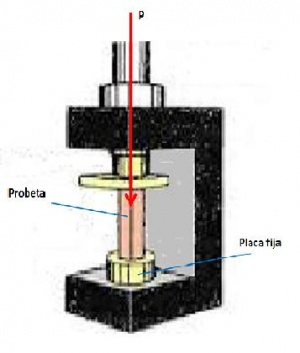
The most common results obtained from this process are the properties of a material when it is compressed by a special machine. For example, in such facilities, the compressive strength and quality of concrete, cement, or mortar—used to fill holes and join structures—are tested. By obtaining these strength values, we can determine the purpose and use of each material; as needed.
So, the goal is not only to provide knowledge about a certain element, but also improve quality based on what is known, using solid and reliable evidence
How is a compression test performed?
 Concrete cylinder. Source: Wikimedia
To carry out this process, it is necessary to use a cylindrical test tube with the item to be analyzed. At the same time, it is placed in special presses, which gradually apply pressure to the cylinder while data and indicators are collected. The image shows that the pressure is so high that the cylinder breaks, and this is the key point because the total weight it withstood is recorded.
Likewise, the result is what is known in professional circles as a stress-strain curve, which is what happens seconds before it breaks. This brings us to three main points:
- Yield strength: This point marks the moment when irreversible deformation of the material begins.
- Single strength limit: This indicates the maximum pressure it can withstand before breaking.
- Breaking point: It provides the most accurate stress to which the part can be subjected before breaking.
The next step will be to apply a powerful formula to obtain the final result:
Bc = Pc / So (kg/cm²), where:
- 6c: Single Strength Limit
- PC: Breaking point in kg
- So: Cross-sectional area of the specimen in cm²
This is how the compressive strength limit is calculated.
Why is this essay important?
The importance lies in clearly understanding what the load capacity that a structure can withstand, up until the point when it breaks or deforms. Tall buildings in large cities underwent various tests before being approved, since their construction required a higher level of strength.
Structuralia It is a school designed for those who wish to continue their education and grow as professionals while acquiring the necessary knowledge in the fields of construction, engineering, and architecture. They will have the opportunity to enroll in programs such as Civil Engineering and Transportation, through the International Master's Degree in Geotechnical Engineering and Foundations, where they will reinforce, expand, and consolidate their knowledge and skills in the fields of construction, geology, and civil engineering.