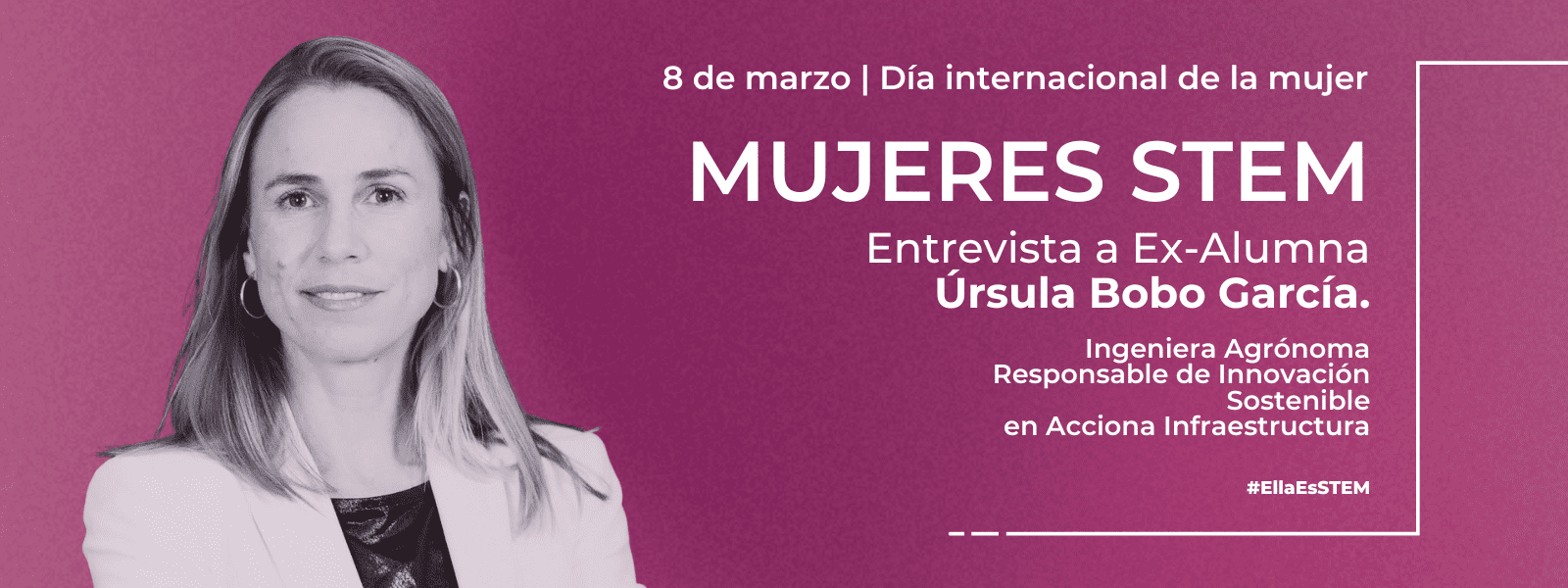
In observance of International Women's Day, Structuralia reaffirms its commitment to women in STEM through the campaign #EllaEsSTEM. This initiative aims to highlight the impact and careers of leading women in engineering, technology, sustainability, and innovation through interviews with alumnae and faculty members who have established themselves in these fields.
Through #EllaEsSTEM, Structuralia not only recognizes the achievements of these professionals but also inspires new generations to follow in their footsteps, fostering careers and promoting equity in sectors critical to global development. In this context, we spoke with Úrsula Bobo García, a leader in sustainable innovation, who shares her experience, challenges, and vision for the future of women in STEM.
In recent years, the The STEM sector has made significant strides in innovation and sustainability, but it still faces challenges in terms of gender equality. Although more and more women are entering these fields, they remain a minority in strategic roles, especially in industries traditionally dominated by men, such as construction and engineering. However, Professionals like Úrsula Bobo García are making a difference and paving the way for future generations.
Úrsula is Agricultural Engineer A graduate of the Polytechnic University of Madrid, with a specialization in irrigation, drainage, and innovation management, he has built a solid career in the construction industry, leading projects with a strong focus on sustainability and environmental impact. Currently, in his role as Head of Sustainable Innovation at Acciona Infraestructuras, It works to integrate technologies that transform the way we envision the infrastructure of the future.
Beyond her professional career, Úrsula is mother of a large family, This has allowed her to develop strategic vision, time management skills, and leadership abilities that she applies in her day-to-day work. In this interview, she shares the challenges she has faced as a woman in STEM, her vision for the future of the sector, and the keys to driving inclusion and innovation in the industry.
What obstacles did you have to overcome to establish your career in STEM?
«One of the main challenges has been the low representation of women in sectors such as construction and innovation. Some things never change. We tell ourselves that one of the reasons is that There aren't enough girls pursuing STEM majors, and they don't pursue them because they don't see them as careers for women.. Well, this needs to be improved, We need inspiring women, women who serve as role models.
»Early in my career, finding role models or mentors was difficult, which sometimes led me to doubt my own professional growth. However, resilience, a strong support network, my passion for my work, and the conviction that sustainability is key to the future have been my driving force."
What has your work experience been like in this industry?
«My experience in this sector has been deeply enriching, but also full of challenges. I have worked on a wide variety of projects throughout my career, which have allowed me to see how innovation not only drives the industry but is also a true catalyst for transformation. However, the integration of women into strategic roles remains a slow process. Women bring an organizational approach that enhances agility and comprehensive project management. And we achieve this by fostering more collaborative work dynamics. Fortunately, I believe that »More and more companies are embracing this approach, creating spaces where our leadership makes a difference."
What has helped you stay motivated and continue to grow in your field?
«Surrounding myself with inspiring people, multidisciplinary teams, and outstanding professionals have been key to my professional and personal growth. Furthermore, seeing the real impact of the projects I work on has been a constant source of motivation. Knowing that sustainable innovation can improve people’s lives and bring about positive change in society drives me to keep learning, exploring new ideas, and seeking innovative solutions that make a difference.
Let's keep working with enthusiasm, hard work, and determination to bring about the positive change our society needs!«
What changes have you noticed in the industry in recent years regarding the inclusion of women?
«I've noticed a positive change in the visibility of women in STEM. There are more and more initiatives promoting our inclusion, from mentoring programs to equity policies in companies.". Women in leadership bring a strategic vision, organized management and efficient decision-making, fostering more collaborative and successful environments. However, there are still barriers to be broken down, especially in more traditional sectors such as construction, where women continue to be in the minority in technical and leadership roles.
I think change is already underway, but we need to keep driving it forward. Because Every woman—whether a leader or an inspiration—leaves her mark so that many more can continue to move forward.«
How can we make it easier for future generations to access opportunities for growth in STEM?
«To make STEM opportunities more accessible to future generations, it is essential Encourage vocations from childhood onward by highlighting female role models and breaking down stereotypes. In addition, we must promote initiatives that integrate innovation and sustainability into both education and professional development.
It is essential to increase the number of scholarships, mentoring programs and support networks »that enable more women to grow and take on leadership roles in these fields. Companies bear a great responsibility for this change: they must not only be attractive to female talent, but also create inclusive and dynamic environments where diversity drives technological solutions that have a positive impact on society and the environment."
What projects or initiatives have you found to be key to promoting diversity in this sector?
«Mentoring programs for women in STEM, technology education initiatives for girls, and events that bring innovation to young women are essential for highlighting female talent and creating spaces for collaboration. In addition, support networks such as Women in Tech play a key role in promoting diversity and equity in the sector.”.
That is why initiatives such as The Guide to Women Leaders in the Business Ecosystem —of which I have recently had the honor of being a part—are more necessary than ever. Highlighting women’s leadership and creating role models is essential to inspiring new generations and building a future that is more innovative, inclusive, and beneficial to society.»
How did your education influence your decision to pursue this career?
«The education I received was key to sparking my interest in technology and innovation. From a young age, I was fortunate to have teachers who encouraged my curiosity and the unconditional support of my family, which allowed me to see engineering not only as a technical discipline, but also as a tool for making an impact and solving major challenges. My training in agricultural engineering gave me a solid foundation for understanding the relationship between technology and sustainability, and over time, my professional development led me to focus on sustainable innovation.
»Today, in my role, I work on projects that combine technology and sustainable solutions to transform society and the environment. This experience confirms that an education that fosters curiosity and critical thinking opens doors to opportunities that change realities."
What challenges do you think we still need to address to make STEM more accessible?
«I think we still need to overcome cultural barriers that associate certain disciplines with a particular gender. It is essential to make working conditions more flexible to allow for a balance between professional and personal life. Furthermore, it is necessary to eliminate unconscious biases in hiring and promotion processes, as well as to ensure equitable working conditions for everyone in the sector.»
What has been the most important lesson you've learned in your career?
«I've discovered that the perseverance and confidence in my own abilities are key to making progress in a challenging industry. I firmly believe that collaboration and a diversity of ideas are essential for developing innovative solutions that have a real impact on the environment. Furthermore, throughout my career, I have been very fortunate to have great mentors and leaders who inspire me every day, demonstrating that knowledge, vision, and leadership can transform realities and have a positive impact on society.»
How would you like to see the industry evolve in the coming years?
«I would like to see a much more equitable STEM sectoror, with genuine female representation at all levels, from technical roles to leadership positions. Furthermore, it is essential that more and more girls and young women feel motivated to explore STEM careers. To achieve this, we need more visible role models, educational programs that foster scientific curiosity from an early age, and companies committed to diversity and inclusion. Only then will we achieve a future where innovation is truly transformative, sustainable, and accessible to all.»
The experience and vision of Úrsula Bobo García They highlight the importance of sustainable innovation and the key role women play in transforming the STEM sector. Their stories are examples of how perseverance, leadership, and passion can drive change and pave the way for future generations.
With initiatives such as #EllaEsSTEM, Structuralia It continues its work to highlight women's talent, promoting a more equitable future and inspiring more women to become part of the technological and sustainable revolution. Because every story matters, and every role model opens up new opportunities.