
Here is a comparison between the single-mode and multimode optical fiber, to find out what sets each one apart.
Single-mode and multimode fiber optics: Which is better?
In the information age in which we live, Fast and reliable connectivity is essential to the smooth functioning of our daily lives and fundamental to thes new work technologies in the engineering sector. From real-time communication to instant access to vast amounts of data, technology has enabled global connectivity that is transforming the way we communicate, work, and enjoy entertainment. At the heart of this digital revolution lies the single-mode and multimode optical fiber, an innovation that has revolutionized the way we transmit and receive information through light signals.
Over the decades, fiber optics have constantly evolved to meet the growing demand for bandwidth and transmission speeds. From its initial emergence in the 1970s, this technology has seen significant improvements that have driven the exponential growth of connectivity, which has enabled a greater transmission capacity compared to the copper cables conventional. In this article, we'll explore in detail the differences between the single-mode and multimode optical fiber, and how they have influenced our ability to connect with the world more quickly and efficiently.
Fiber Optics
Optical fiber, in its most basic form, is a transmission medium used to send information using light pulses. It consists of a central core, usually made of glass or plastic, surrounded by a coating layer and protected by an outer shell. The key to its operation lies in its ability to to transmit light signals through multiple internal reflections, which allows information to travel at speeds close to the speed of light.
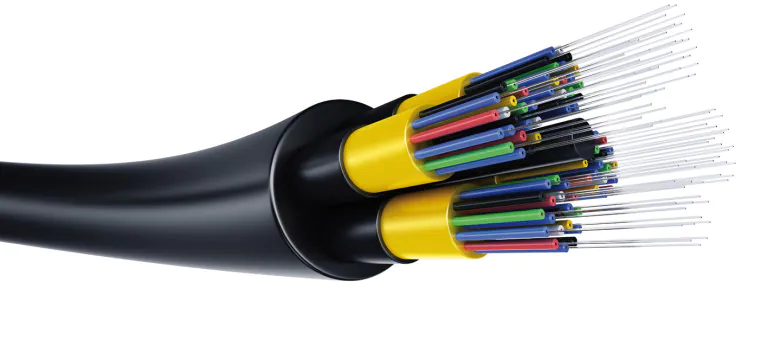
Illustrative image showing what a high-performance fiber-optic cable looks like. Sikora.net
Single-mode and multimode optical fiber
Single-mode and multimode optical fiber are two types that differ in their design and transmission capacity. Multimode optical fiber, also known as multimode fiber, use a core with the largest diameter which allows multiple light modes to propagate through it. This characteristic facilitates data transmission over short distances at moderate speeds, making it ideal for local network applications, such as offices and college campuses.
On the other hand, the single-mode optical fibero, also known as single-mode fiber, uses a much thinner core which allows only one mode of light to propagate through it. This results in a greater transmission capacity and less signal attenuation over longer distances. Single-mode fiber is widely used in long-distance applications, such as global telecommunications networks and Internet infrastructure, where high performance and low signal loss are required.
In technical terms, the single-mode optical fiber has a core diameter of approximately 9 micrometers, whereas the multimode fiber has a core diameter ranging from 50 to 62.5 micrometers. In addition, single-mode fiber is capable of transmitting signals over much greater distances—reaching several kilometers without the need for signal regeneration—compared to multimode fiber, which has a more limited range.
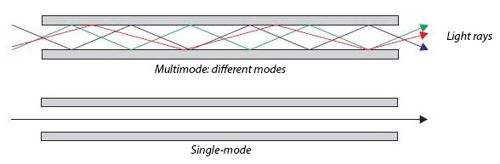 Schematic cross-section showing the path of light in multimode (top) and single-mode (bottom) optical fiber cables. Blackbox.com
Differences Between Single-Mode and Multimode Optical Fiber
-
Bandwidth and transmission speed:. Because of the difference in core thicknesses, single-mode fiber can transmit data at higher speeds, reaching speeds of up to several terabits per second. Multimode fiber, on the other hand, has a more limited bandwidth and more moderate transmission speeds, generally in the gigabits-per-second range.
- Transmission distance: Single-mode optical fiber outperforms multimode fiber in terms of transmission range. Single-mode fiber can transmit signals over much greater distances without the need for repeaters or signal regenerators. Single-mode fiber transmissions of more than 100 kilometers have been achieved without significant signal degradation. In contrast, multimode fiber has a more limited range—generally up to a few kilometers—before signal quality degrades and regeneration is required.
- Cost: Historically, single-mode fiber has been more expensive than multimode fiber due to the complexity of its design and manufacturing. However, with technological advances and increased demand, the costs of single-mode fiber have decreased, approaching those of multimode fiber in some cases. Despite this, there is still a significant cost difference between the two types of optical fiber, which influences the choice depending on the project’s needs and budget.
-
Connectors and networking equipment: Single-mode and multimode fiber use different Types of Connectors and Network Equipment. The most common connectors for single-mode fiber are the SC (Subscriber Connector) and the LC (Small Connector). These connectors ensure precise fiber alignment and minimize signal loss. Multimode fiber, on the other hand, primarily uses the ST (Straight-Through) connector, although others such as the SC connector are also used. Network equipment also varies depending on the type of fiber used, with transceivers and components adapted to the specific characteristics of each type of fiber.
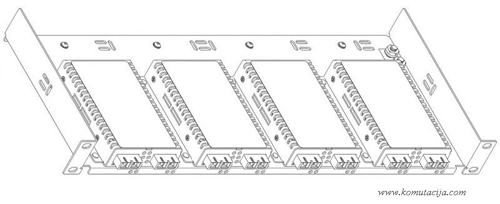 Illustration of a group of single-mode and multimode fiber-optic signal regenerators. Komutacija.com
Understanding the different types of optical fibers—such as single-mode and multimode—is essential to making the most of connectivity capabilities in today’s world. These technologies have revolutionized the way we communicate, work, and enjoy entertainment, providing impressive transmission speeds and extended ranges. Understanding the Differences Between Single-Mode and Multimode Optical Fiber enables engineers and technology professionals to select the most appropriate option for each project, thereby optimizing network performance and efficiency.
Choosing the right optical fiber not only ensures a reliable and fast data transmission, but it can also have a significant impact on the cost and scalability of a network infrastructure. The single-mode fiber It excels in long-distance, high-speed applications, such as global telecommunications networks, while the multimode fiber It can be a suitable solution for local and shorter-range networks. By taking advantage of the unique benefits and characteristics of each type of fiber, Engineers can design and deploy optimal communication systems that meet current and future needs.
Ultimately, the single-mode and multimode optical fiber They continue to drive technological progress, enabling the development of new applications and services that transform the way we interact with the digital world. Staying informed about these technologies and their capabilities is essential to keeping up with the latest developments in an increasingly connected world. With the constant growth in demand for bandwidth and speed, Fiber optics will continue to be a cornerstone of the communications field, and making the most of its benefits will allow us to move toward an even more interconnected and efficient future.