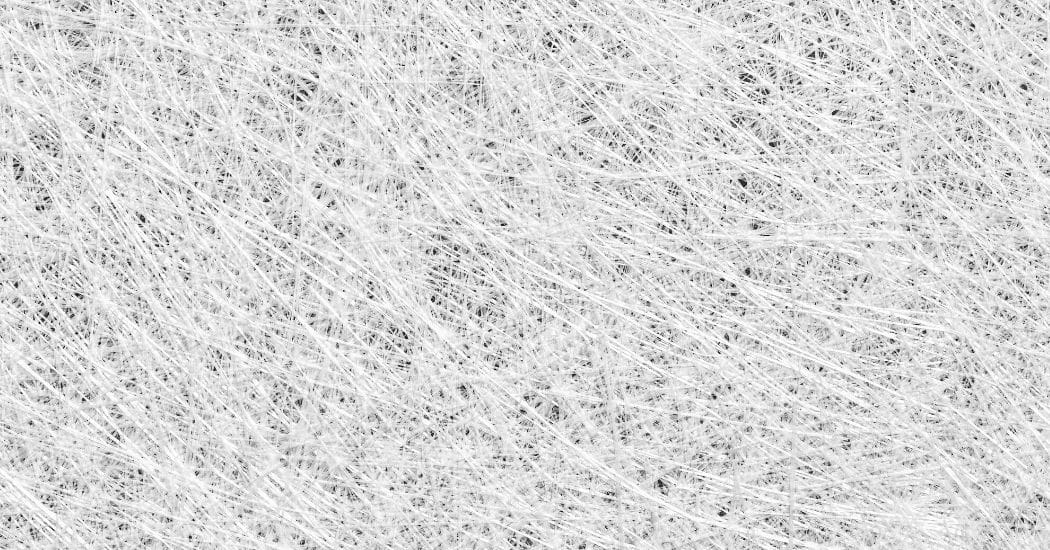
The polypropylene fibers They are a concrete additive that provides the following properties: uniformity and tensile strength, at a low cost.
One of the advantages of concrete is the versatility of the mix and the range of properties it can achieve, simply by adding specific additivesduring the mixing process. Additives can impart various properties to concrete, such as increasing its setting speed, workability, and color, and even enhancing its tensile strength, as is the case when adding polypropylene fibers to the mixture.
Concrete, in and of itself, has very good properties, such as its high compressive strength, cost-effectiveness, and versatility; but mechanical resistance to tensile forces is not one of them. Because it is such a rigid material, it is highly prone to fracture under any stress involving tensile stress states (bending, shear, and torsional stresses), which is why, sIt is often reinforced with a steel frame for use in structures; and, under specific conditions, it is fortified with additives such as polypropylene fibers
What are propylene fibers?
Propylene is classified among the thermoplastics, and it is produced by polymerizing propylene, a gaseous substance derived from petroleum refining. One of its main advantages is that it is a material that easy processing and that can function as moisture barrier. Its strength and transparency make it ideal for industries such as textiles, automotive, medical, packaging, and, of course, construction.
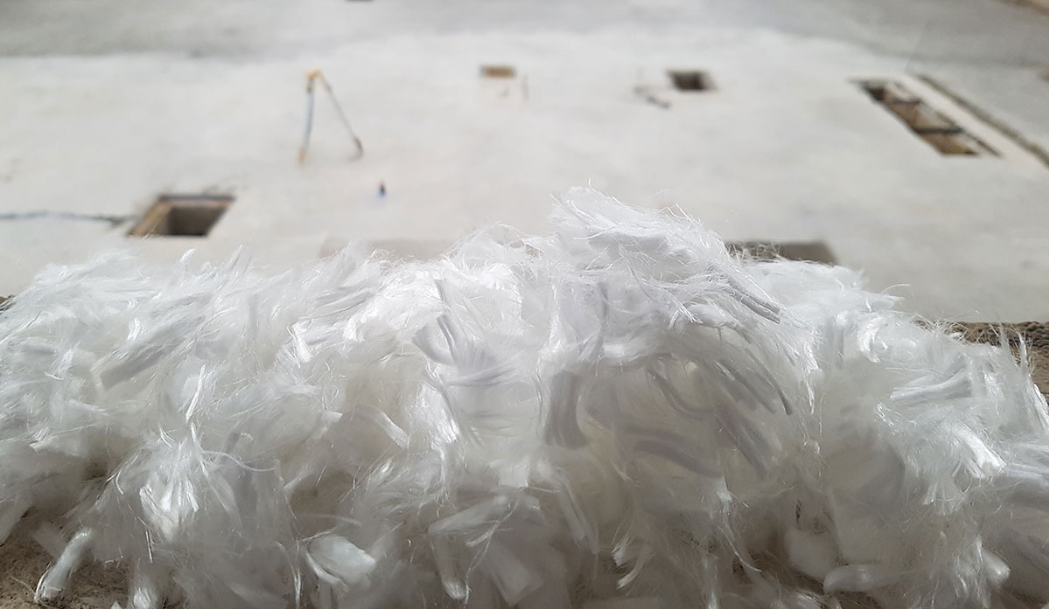 polypropylene fibers. Source: psiconcreto.com
Concrete and Fiber Additives
Although it may seem unusual, most of the additives used to improve the properties of concrete—after steel bars, of course—are the fiber-based additives and they come in various forms, which we group into two categories:
Microfibers
As their name suggests, they are characterized by their small size and are used to identify the fibers whose length ranges from 12 to 75 millimeters. They help improve the uniformity of the concrete mix by reducing the segregation of the various components within the mix, resulting in concrete with fewer cracks or fissures. We're talking about fibers such as plastic fibers, polypropylene, polyethylene, or nylon.
Macrofibers
This category includes materials such as glass, certain recycled plastics, natural fibers, and even steel, implying that these are larger fibers. In this case, the addition of fibers (of this size) has a more direct effect on the mechanical properties of concrete. In some cases, it is possible to mimic the function of an electro-welded mesh, enabling the material to acquire additional load-bearing capacity after cracking and to be more resistant to surface impacts. To achieve this, fibers with diameters between 0.25 and 1.5 mm are used, and lengths ranging from 13 mm to 70 mm.
Properties of Polypropylene Fibers in Concrete
As we’ve already mentioned, polypropylene fibers are an additive that belongs to the microfiber group and share many of the same advantages as other microfibers; they also have several other advantages similar to those of macrofibers:
- It serves as a parallel or alternative reinforcement system to mesh, but with a best value for the money.
- Reduces or prevents the formation of cracks on the concrete surface, which are generally caused by shrinkage and contraction of the material and may lead to carbonation of the concrete.
- If used as reinforcement for concrete, It's much faster, since it can be applied directly, unlike other reinforcement methods such as rebar and wire mesh.
- Compared to other reinforcement methods, provides much more consistent support throughout the entire mixture, thanks to its small size and ease of handling.
- It is an additive that It does not promote corrosion within the material, nor does it have magnetic properties.
- It significantly increases concrete's impact resistance, whether from projectiles or other natural agents.
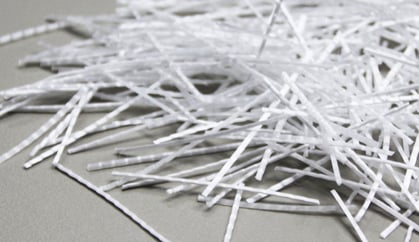 Polypropylene fiber additive for concrete. Source: Texdelta.com
As we can see, the range of possibilities and properties that can be achieved by adding admixtures to concrete is very broad and varied, and when An additive manages to combine benefits, cost-effectiveness, and accessibility The properties of polypropylene fibers should be utilized to the fullest. It is no coincidence that this is one of the most commonly used additives in the construction of industrial flooring, heavy-duty floors, tunnels, roads, and precast concrete elements.