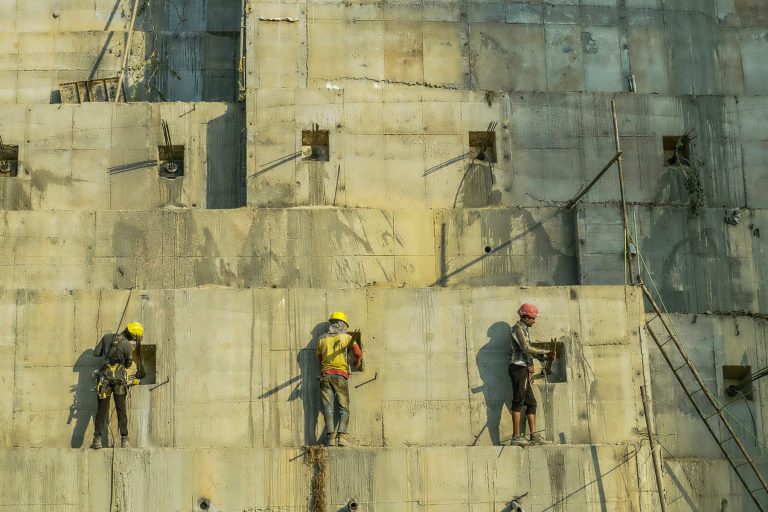
The axial force It is a concept used on a daily basis by engineers who specialize in structural analysis.
Axial Force and Its Application in Structural Analysis
In the field of structural engineering, a solid grasp of fundamental concepts is essential to ensure the integrity and security of any project. Among these basic principles, the axial force plays a crucial role in the analysis and design of structures. Although the structural theory It covers a wide variety of forces and effects; understanding concepts such as the axial force It is essential in the day-to-day work of civil and structural engineers. This knowledge applies not only to buildings, but also to bridges, towers, and all kinds of structures in which safety depends on load control.
The Geometric Center and Its Importance in Structural Analysis
Before addressing the concept of axial force, it is necessary to understand another key concept: the geometric center of a section. This is the midpoint or «centroid» of a cross-section of a structural member. From an engineering standpoint, the geometric center is where the properties of the section are concentrated for calculation purposes, such as the area and the moment of inertia. Correctly identifying the geometric center is essential because, in many structures, The loads are applied so that they pass through this point, ensuring better structural performance efficient and predictable. Without a proper definition of this concept, the analysis of forces such as axial force becomes inaccurate.
Definition and Concept of Axial Force
Axial force is the force that acts along the longitudinal axis of a structural member, whether in compression or tension. In other words, an axial load is a force applied in such a way that it passes through the geometric center of the element, ensuring that it does not create additional moments or deflections. This type of force is particularly relevant in columns, piles, and any other component subjected to tensile or compressive forces. An engineer's ability to identify and calculate axial force is key to preventing structural problems such as buckling, which can compromise a building's stability.
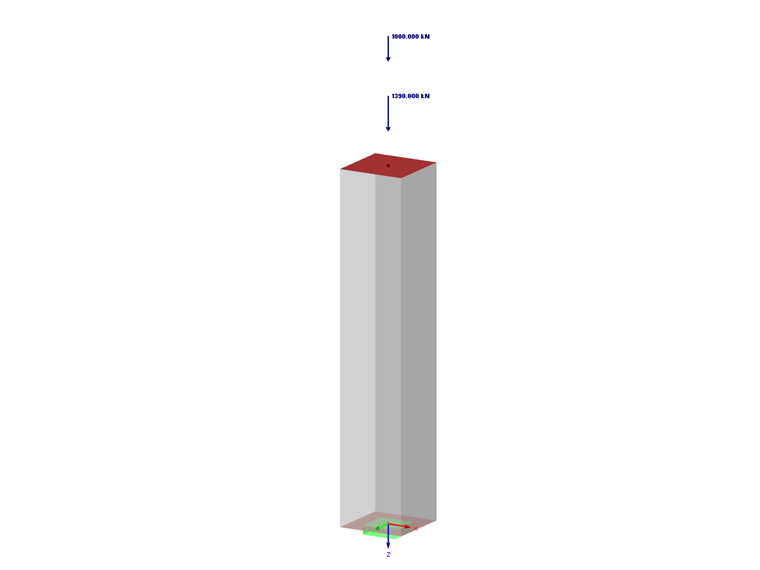
For example, in the case of a column supporting the weight of a ceiling, if the applied load is axial, the column It will be compressed evenly along its entire length. This results in a balanced distribution of forces, which minimizes the risk of collapse. However, if the load is not perfectly axial, the column may experience a undesirable behavior, such as bending or flexing, which can reduce its load-bearing capacity. Therefore, the correct identification and calculation of axial force are essential for any engineer working on construction projects.
Eccentric forces: the counterpart to axial forces
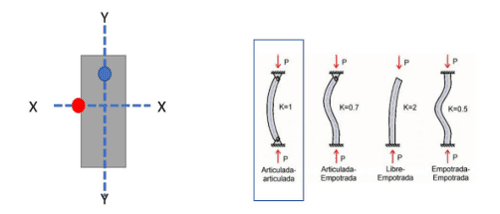
In counterforce to the axial force, there are eccentric forces, which do not act along the longitudinal axis of the structural member. These forces are applied to a a certain distance from the geometric center, creating moments that can cause the member to bend or twist. Eccentric loads are common in practice, especially in situations where it is not possible to perfectly align the load with the center of the element. A clear example is when a beam is subjected to a lateral load, which can to cause a turn or bend in it. The analysis of these forces is equally crucial, since the moments generated by the eccentric loads may compromise the structural integrity of the building if they are not handled properly.
In the fast-paced world of engineering and construction, where safety and efficiency are cornerstones, engineers and architects cannot afford to neglect their training in such essential concepts as axial force and other forces that affect the structural design. Advances in construction techniques and materials require an ongoing effort to stay up to date and maintain expertise. Innovation depends not only on new ideas, but also on a deep understanding of the basic principles. For those seeking to continue growing and contribute to the society of the future, continuing education is the key. In this regard, Structuralia offers a wide range of online courses and master’s programs in engineering and innovation, which can serve as the next step on the path to specialization and professional success.