The process management It is a fundamental part of a company, and engineers in all sectors should be familiar with it.
Process Management or BPM in Industry
In the digital age and Industry 4.0, Process management is emerging as a fundamental pillar for the success of companies in the engineering sector. In an increasingly dynamic and competitive business environment, operational efficiency has become a critical factor. This is where process management, or BPM (business process management), is gaining importance as an essential methodology for optimizing and refining internal operations.
Companies that adopt a robust process management strategy are better positioned to tackle the challenges of digital transformation. The ability to understand, analyze, and improve workflows translates into a greater agility and adaptability to the changing demands of the market.
What do we mean when we talk about process management or BPM?
Process management, commonly known as BPM (Business Process Management), is a comprehensive discipline that seeks to improve the efficiency and effectiveness of business operations. It focuses on the identification, design, implementation, monitoring, and optimization of an organization's internal processes. In essence, BPM The goal is to understand, document, and improve workflows to achieve more consistent results and aligned with the strategic objectives.
From the conceptualization of a project through its implementation and follow-up, process management provides a framework for ensure consistency, reduce errors, and increase efficiency. It is commonly used to streamline operations, improve the quality of products or services, and facilitate adaptation to changes in the business environment. The flexibility inherent in BPM makes it a valuable tool for businesses who are seeking to thrive in an ever-changing business world.
 Infographic on the essential concepts of process management. Decide
The Main Characteristics of Process Management
Process Modeling:
Process modeling is an essential pillar of process management. It involves the graphical representation or diagramming of workflows, roles, and activities within an organization. By using visual tools, companies can easily understand the structure and interconnections of their processes, providing a clear overview that makes it easier to identify areas for improvement and optimization.
Documentation:
Comprehensive documentation of processes is crucial for effective management. Capturing every detail—from the specific steps to the roles involved—provides a clear reference and a starting point for future improvements. Documentation also facilitates internal communication, ensuring that all team members are on the same page regarding established procedures.
Value Delivery:
Process management focuses on delivering value to the customer and the organization as a whole. By understanding and optimizing processes, Companies can improve the quality of the products or services they offer, reduce delivery times, and increase customer satisfaction. A focus on delivering value is essential for long-term success.
Follow-up:
Constant monitoring of processes is a hallmark of process management. Through specific tools and metrics, Organizations can monitor performance in real time. This monitoring not only enables the early detection of potential problems, but also provides valuable data for future optimizations.
Systematization:
Systematization involves the implementation of technologies and systems that automate and support the execution of processes. From specialized software to integrated management systems, This feature is designed to improve efficiency, minimize errors, and provide a platform for scaling operations. Systematization is key to ensuring consistency and agility in a dynamic business environment.
Process Management Methodologies
Various methodologies have emerged to address the different facets of operational optimization. Each approach offers unique perspectives, ranging from continuous improvement to production efficiency. We will briefly explore some of the most prominent methodologies that have proven effective in optimizing processes in engineering and other business sectors.
PDCA Cycle
The PDCA cycle, which stands for Plan, Do, Check, and Act, is an iterative management methodology designed to drive continuous improvement. The focus on careful planning, implementation, evaluation, and corrective action, the PDCA cycle provides a solid framework for the continuous optimization of processes, fostering adaptability and effectiveness over time.
Lean Manufacturing:
Originating from the Toyota production system, the philosophy, Read the Structuralia blog which focuses on eliminating waste and maximizing value for the customer. When applied to process management, the Lean methodology aims to reduce complexity, improve efficiency, and minimize delivery times. It is especially valuable for companies looking to operate more efficiently and profitably.
Kaizen:
Kaizen, which translates to «continuous improvement» in Japanese, is a methodology that promotes incremental and sustainable changes in processes. It is based on the active participation of employees and the ongoing identification of opportunities for improvement. Kaizen focuses not only on the end results, but also on the improvement process itself, creating an organizational culture geared toward continuous excellence.
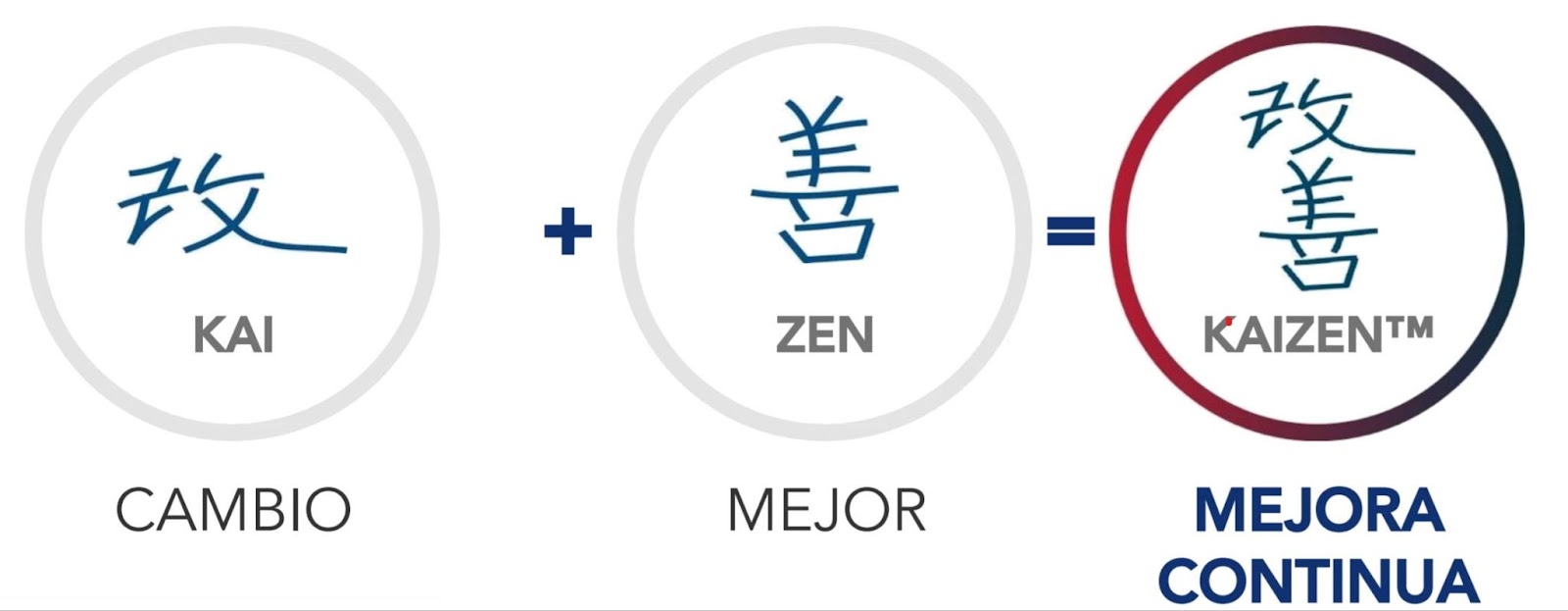
Kaizen Symbols: a widely used process management methodology in companies of all sizes. SD Industrial
Six Sigma:
Six Sigma is a methodology that focuses on reducing variability and improving quality. Through the application of statistical principles and rigorous techniques, (Six Sigma blog on Structuralia) aims to achieve a very low defect rate in its processes. This methodology is particularly valuable in environments where precision and consistency are critical, such as in engineering and manufacturing.
Benchmarking:
The benchmarking methodology involves comparing an organization's processes and results with those of other leading organizations in the industry. By identifying best practices and benchmarking themselves against industry leaders, companies can learn, adapt, and continuously improve. Benchmarking is a strategic tool for boosting competitiveness and operational efficiency.
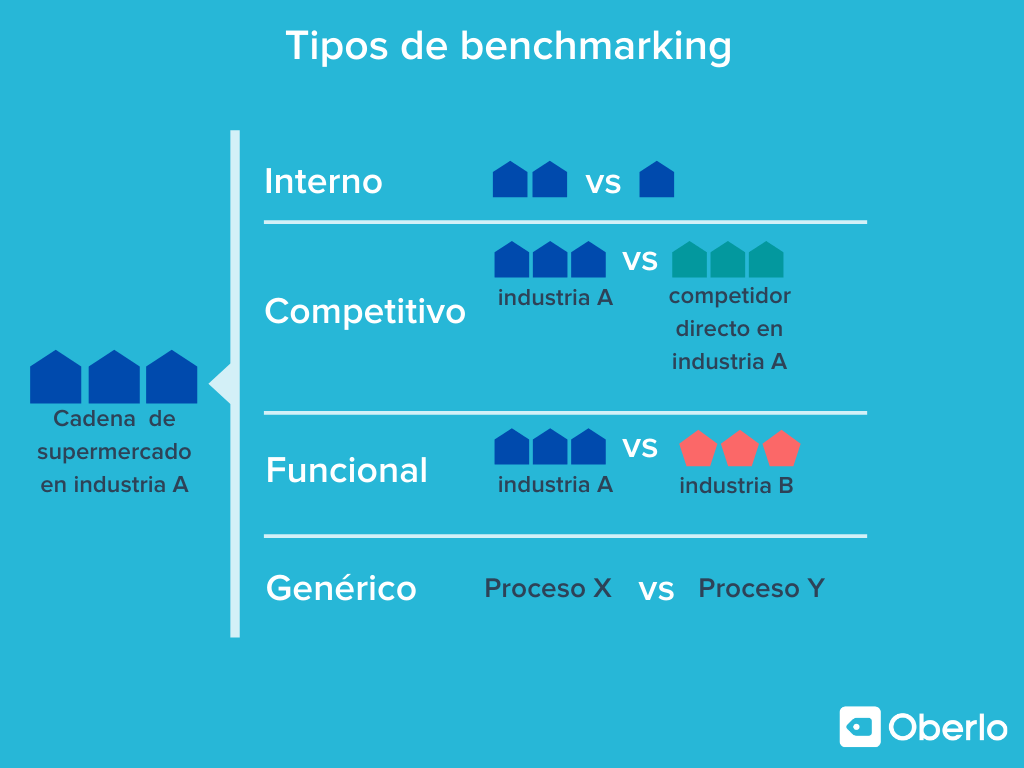
An illustrative image of the types of benchmarking, a well-known process management methodology. Oberlo
Each of the process management methodologies It has its pros and cons; it's up to the professionals to know and understand the the specific needs of each project. To this end, it is essential not only to be familiar with the wide range of process management methodologies, but also to stay up to date on the latest trends in process management at the professional level. This is where continuing education becomes a differentiating factor for professionals who work in process management; and Structuralia offers a wide range of management courses and master's programs that can help you secure the best career opportunities in the fields of engineering and management. The Master's Degree in Agile Methodologies and Project Management, is a great example of this; here you'll learn in depth about all the process management methodologies we've covered in this article.