The fiber-reinforced concrete It is one of the most widely used in recent years. In this post, we explain its different types, characteristics, and applications.
The Importance of Urban Planning: Sustainability and Health
The fiber-reinforced concrete It has excellent features. Most notably, it stands out as an element of greater resistance. In addition, there are several types of this concrete that we should keep in mind. In this article, we’ll explain what it is and describe the characteristics that define each of its main variants.

What is fiber-reinforced concrete?
These concretes are characterized by being reinforced through the fiber content. These are short, inconspicuous, and randomly distributed in the mixture to strengthen the dough and control cracking and shrinkage during drying. In addition, reduce permeability of the material and any water that may be present in it.
The use of fibers focuses on increase endurance to theconcrete cracking. Without them, it lacks tensile strength, making it prone to cracking. These defects are caused by plastic shrinkage and by shrinkage that occurs during drying. By adding fibers, the material’s permeability is reduced, which prevents it from losing too much water. This reduces cracking during the curing process.
Depending on the type of fiber we use, we can give the concrete additional properties. The resistance to abrasion, impact, or breakage These are a few examples. The fibers are added after all the aggregates that make up the concrete have been mixed. It is important to add the right amount, because if too much is added, the fibers will end up protruding from the material.
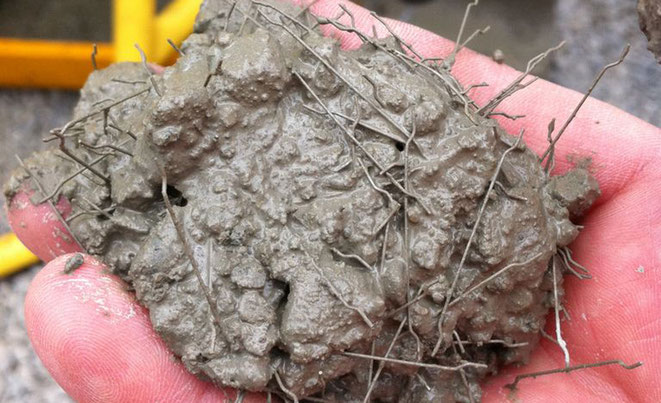
The amount of fiber we should use varies depending on the project and other factors. For example, a typical amount is 20–30 kilograms per cubic meter to create a seamless floor. Furthermore, if we want to ensure success, we need to use a structural engineer, Well, he has the necessary knowledge to do a good job.
Types of Fibers
Fibers are key to improving the properties of concrete or imparting specific properties to it. Basically, there are four types that we should be familiar with, since they are the most commonly used. Each one has some specific qualities, which are very helpful in construction.
Steel fiber
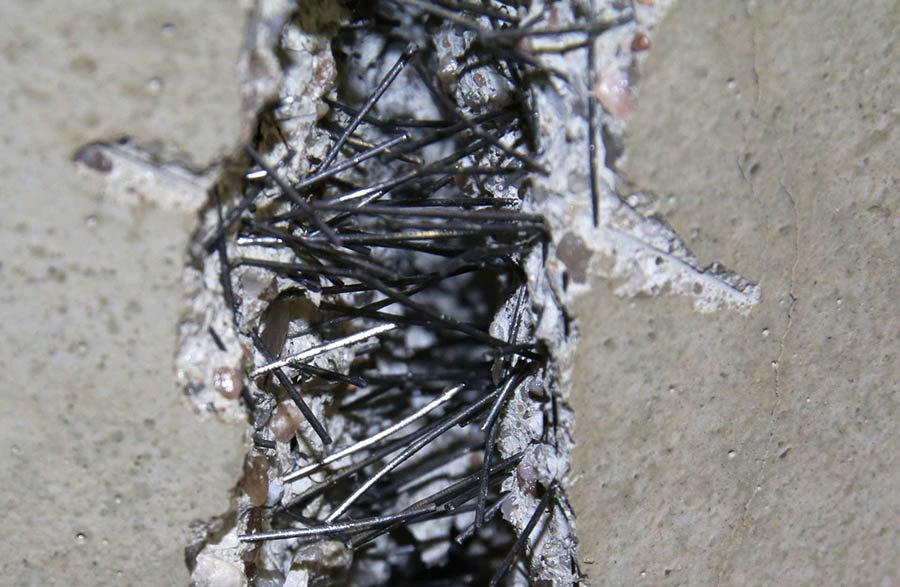
They are small steel wires which are mixed with cement, sand, and concrete aggregate. These give the mixture a high structural strength and increase the bending strength, which makes it difficult for the material to deform. In addition, this fiber provides ductility, Fracture control and allow it to withstand the impact without breaking. In that regard, the results are similar to those offered by wire mesh or electro-welded mesh.
Nylon fiber
 Nylon fiber is added to the concrete mix to to increase its strength or control cracking during setting. It also improves pumping capacity, which reduces material loss in the pipes. This allows for maximum utilization while enhancing the system's performance.
Glass fibers
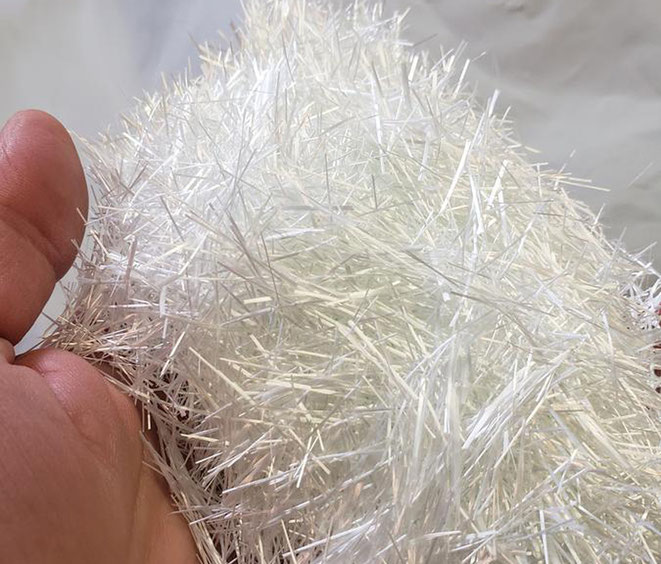 It is primarily used in the manufacture of panels for building facades. These fibers are sprayed onto a mortar base in several layers, and the resulting material has an adequate modulus of elasticity y resistance tensile strength. As a general rule, the volume of fiber used is 5 % of the concrete's dry weight. In addition, it is important to select the smallest filaments.
Natural fibers
This fiber typeIt has begun to be used in recent years. It is made from raw materials such as coconut, banana, and sugarcane, which reduces the cost of reinforced concrete. However, the resulting material must be sealed to prevent deterioration and should not be overused. Among its qualities, it stands out for its fire resistance and its ability to help prevent cracking.
Applications of Fiber-Reinforced Concrete
The applications of this reinforced concrete depend on the project and the properties that are to be utilized. For example, it is used to support underground construction, such as tunnels. Also help stabilize the structure, which makes them very useful for slope stabilization and pool construction. In these cases, the mortar is sprayed on to increase its effectiveness.
On the other hand, it is used in prefabricated parts, such as panels for enclosures and walls. These products are either two-dimensional or three-dimensional, and the fibers help reinforce the material so that it maintains its structural integrity at all times. For this reason, it is commonly used in highly complex architectural projects.
In addition to these, the floor slabs and flooring They make good use of reinforced concrete. Metal fibers stand out the most, as they have been used for decades with excellent results. Because they offer high tensile strength, it is possible to create floors that can easily withstand foot traffic or vehicle traffic.
Another interesting application is when you're going to perform a construction in a harsh environment. The sea is a good example, since it gradually erodes any material it comes into contact with. If this were to happen to a building’s foundation, we would be facing a serious problem. Therefore, the use of fiber is crucial to ensuring that concrete can withstand the ravages of the weather.
They are also widely used in the construction of building foundations. These provide the entire structure with a stable, level, and sturdy foundation. They are also used to to install posts, especially for properties that require very specific characteristics.
The pipes and the ducts are other interesting applications. When building a sewer system, fiber-reinforced concrete delivers excellent results. It will withstand the water abrasion and, at the same time, to the external forces acting on the entire structure.
In short, the fiber-reinforced concrete It is a material that is widely used and essential in modern architecture. When we want to give it additional properties, there is no more effective solution. Whether it’s to withstand stress or the impact of water, it’s unrivaled. At Structuralia, we offer the best education in engineering and architecture for professionals in this sector. Find out more!