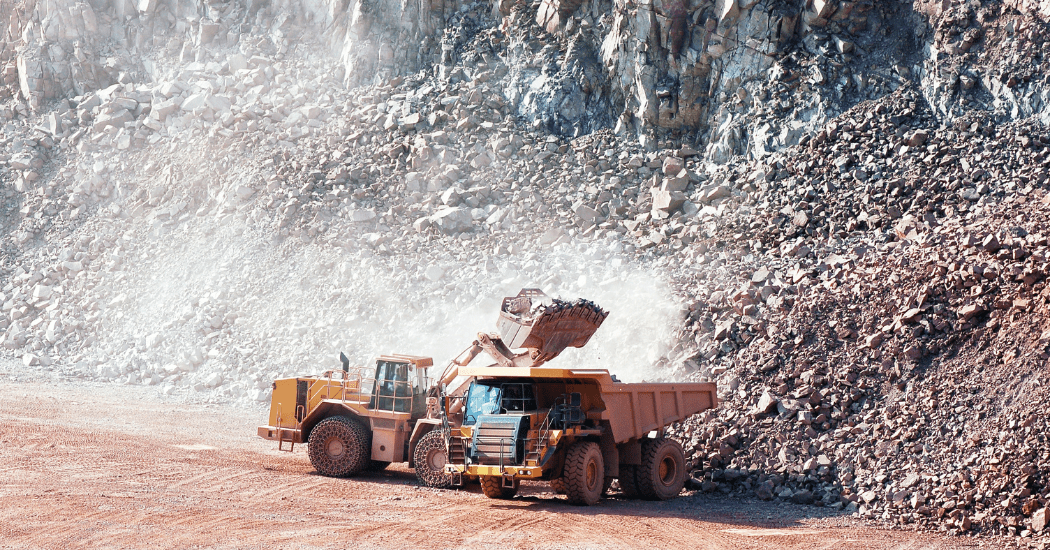
The mining industry implements solutions for renewable energy to reduce its carbon footprint and comply with strict environmental requirements.
The industry mining is a economic sector which is engaged in the extraction and processing of minerals—both metallic and nonmetallic—for subsequent sale and use in various industries and productive sectors.
This industry can be divided into several subcategories depending on the type of mineral being mined and processed, such as gold, silver, copper, iron, coal, and diamonds, among others.
Like any other industry, the mining industry faces significant challenges and trends. In this article, you'll find more detailed information on these two important aspects.
Trends in the Mining Industry
1. Automation
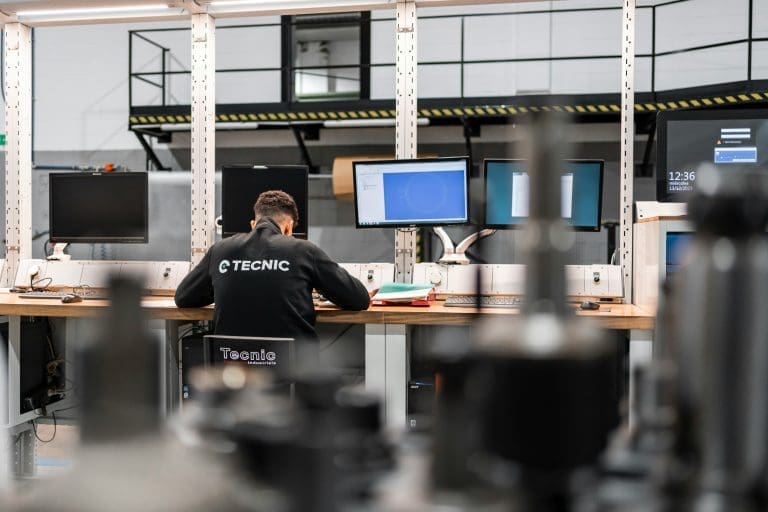
Automation in the mining industry refers to the use of advanced technologies to improve and optimize extraction and production processes in mining operations. These technologies include process control systems, robotics, artificial intelligence, data analytics, sensors, and other electronic devices.
Automation in the mining industry can have several benefits, such as reducing operating costs, improving worker safety, and optimizing production. For example, automation systems can monitor and control drilling, excavation, and transportation processes, which helps reduce human error and improve efficiency in mineral extraction.
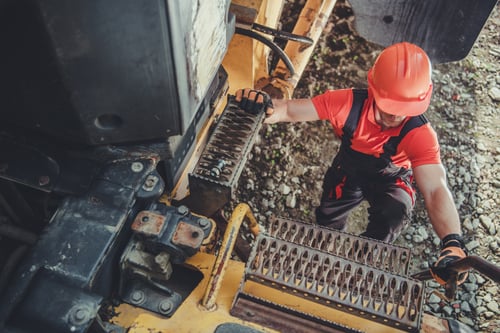
In addition, automation can also help improve the worker safety by enabling the remote operation of heavy machinery and eliminating tasks that are hazardous to workers. It can also provide real-time data on workplace conditions, allowing workers to make more informed decisions and improve overall safety.
2. Renewable Energy
Mining companies are implementing renewable energy solutions to reduce their carbon footprint and comply with increasingly stringent environmental requirements.
In recent years, renewable energy has experienced significant growth worldwide, leading to an increase in demand for minerals and metals used in the production of clean technologies such as solar panels, batteries, and wind turbines. As a result, the mining industry is playing an increasingly important role in supplying the materials needed for the transition to a low-carbon economy.
In particular, the mining of lithium, cobalt, nickel, graphite, and other metals has become a crucial component in the production of batteries, which are essential for storing renewable energy. Metal extraction is also necessary for the manufacture of solar panels and wind turbines.
It is important to note that mining these metals can have a significant environmental impact, so it is important to ensure that it is carried out in a responsible and sustainable manner. Many mining companies are by adopting more sustainable and responsible production practices, with the goal of minimizing negative impacts and maximizing social and environmental benefits.
In summary, the mining industry is playing an important role in the transition to renewable energy by providing the materials needed to produce clean technologies. As demand for renewable energy continues to rise, it is expected that the demand for minerals and metals also increases, which could lead to increased investment and growth in the mining industry.
3. Big Data and Data Analysis
Mining companies are increasingly using data analysis to improve production efficiency and reduce costs.
The mining industry is one of the oldest and most fundamental sectors of the global economy, and today it faces multiple challenges, such as cost reduction, production optimization, and compliance with safety and environmental requirements. In this context, the use of data analysis technologies and Big Data It has become a key tool for improving efficiency and productivity in the mining industry.

In the mining industry, data is generated by multiple sources, such as sensors on equipment and machinery, environmental monitoring systems, process control systems, and exploration and production data, among others. This data can be structured (such as production data) or unstructured (such as inspection reports).
With big data analysis, data can be processed to identify patterns, trends and correlations which can be used to optimize production processes, predict equipment failures, improve worker safety, and reduce costs.
For example, equipment condition monitoring systems can generate large amounts of data, which can be analyzed to predict equipment failures and schedule preventive maintenance. In addition, the scan data can be analyzed to identify areas with high mineral production potential.
Another important aspect is environmental analysis, which allows monitoring water and air quality, and identifying potential environmental impacts. Data analysis can help the mining industry to comply with environmental regulations and mitigate negative impacts on the environment.
In summary, big data analytics and data analysis technology are transforming the mining industry. By using data effectively, the mining industry can improve productivity, reduce costs, and improve safety and environmental compliance.
4. Underground Mining
The trend toward underground mining is on the rise, as it allows minerals to be extracted more safely and with less environmental impact.
Underground mining is a technique for extracting minerals that is carried out below ground. Unlike open-pit mining, in which They extract minerals from the earth's surface, in underground mining, adits and tunnels are built underground to access mineral deposits.
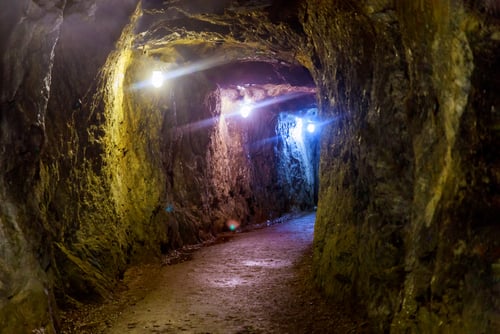
Underground mining is used to extract a wide variety of minerals, including gold, silver, copper, iron, coal, and many others. This technique is particularly suitable for the extraction of minerals found in deep deposits, which would be difficult or costly to extract through open-pit mining.
However, underground mining also involves certain risks and challenges. The construction and maintenance of tunnels and adits can be dangerous and costly, and underground miners may face difficult working conditions, such as a lack of natural light and exposure to toxic gases. In addition, underground mining can have a negative impact on the environment and the health of people living near the mines.
Challenges Facing the Mining Industry
The mining industry faces several challenges, including the following:
1. Environmental Sustainability and Climate Change
The mining industry has a significant impact on the environment, ranging from greenhouse gas emissions to water and soil pollution, which makes it vulnerable in response to climate change. Environmental sustainability is a major challenge for the mining industry, as it must find ways to minimize its impact and reduce its environmental footprint.
2. Workplace Safety
The mining industry is one of the most dangerous in terms of workplace accidents and injuries. Workplace safety is a critical challenge for the industry, which must find ways to protect its workers and improve its safety practices.
3. Operating Costs
The mining industry requires large capital investments and faces significant operating costs. The volatility of metal prices and the global competition These are significant challenges for the industry in terms of profitability and operational efficiency.
4. Technological Innovation
The mining industry must constantly seek new ways to improve its efficiency and productivity by adopting innovative technologies. Digitalization, automation, and artificial intelligence are key areas of innovation for the mining industry.
5. Community Management
The mining industry is often located in remote areas and can have a significant impact on local communities. Community management is a critical challenge for the mining industry, which must work to establish strong and sustainable relationships with local communities and ensure that they receive a fair share of the benefits from mining activities.
A lack of positive relationships with communities can affect the industry's reputation and the sustainability of mining operations.
6. Environmental Impact and Regulations
Mining can have a significant impact on the environment, including soil degradation and water and air pollution, which also means that the requirements and government environmental regulations become increasingly strict, which could drive up costs and affect the profitability of mining operations.
In conclusion, the mining industry faces significant challenges, including climate change, environmental impact, regulations, and relations with local communities. However, trends toward automation, renewable energy, data analytics, and underground mining can help the industry address these challenges and improve its long-term efficiency and sustainability.
The mining industry is a complex undertaking that requires specialized knowledge for its ongoing management and development. If you're a professional who is passionate about this field, at Structuralia We offer you the Master's Degree in Management and Systems in the Mining Industry which will enable you to make your mark as a top-level engineer in this exciting field.