The Career Paths in Civil Engineering They must bring a broad perspective and cross-functional skills to tackle the day-to-day challenges of their work.
Achieving professional success is the goal of any company in civil engineering. However, for a company to meet its challenges, its teams of professionals must first rise to the challenge posed by the industry’s new paradigm: digital transformation, multidisciplinary work, and the social and interpersonal skills needed to combine technical expertise with management.
That is why it is so important for professionals to make such a point of pursuing a specialization in civil engineering as well as to develop their soft skills.
Essential Skills for the Civil Engineering Role
Civil engineers must bring a broad perspective and cross-functional skills to their day-to-day work. In fact, even in the case of junior positions or highly technical roles, these professionals must also be able to solve problems and demonstrate some leadership skills.
1. What is the profile of a civil engineer?
Faced with an extremely demanding job market, The profile of a civil engineering professional must go far beyond the conventional. Keep in mind that hundreds of college graduates complete this degree program every year. So… How can you set yourself apart from the rest? What should you do to make a major company choose to hire you over another professional?

Without a doubt, the first factor is your level of postgraduate education. It is essential that you pursue a specialization in civil engineering through which you'll gain technical knowledge that will set you apart from the rest.
You can pursue a master’s degree related to your current field of study or work to gain a higher level of specialization in that same area. Or you can pursue a master’s degree in a different field to make your professional profile more versatile and well-rounded, since you’ll be mastering different areas at the same time.
If you need help making your profile as a civil engineer more appealing, we recommend reading our article How to Update Your Profile as an Engineer and Not Miss Out on Job Opportunities.
Skills Required for Civil Engineering Professionals
On the other hand, it’s not just your hard skills that matter—your soft skills are important, too. With that in mind, here are the essential skills you need to adapt to the current landscape of civil engineering—skills that go beyond mere talent:
Perseverance in the face of adversity is a quality that every civil engineer must possess. It is important to keep in mind that Mistakes are part of the professional experience and, therefore, it is necessary to accept them in order to make progress and achieve the projects' objectives.
Being proactive and planning all developments and task prioritization is a highly valued skill. This makes it easier to meet the deadlines and objectives set with clients. In addition, The scale of engineering projects necessarily requires teamwork as a means of achieving your goals, so you need to draw on both your own experience and creativity and that of your colleagues. It will show in the results!
If there is one thing for which civil engineering professionals are valued, it is their problem-solving skills and their proactive approach to solving a wide range of problems. Therefore, They should never lack initiative when it comes to carrying out their own actions to handle unforeseen circumstances and correct errors.
Just as important as providing executive skills related to project management, information technology, and administration is adopting a leadership attitude, helping team members, strengthening bonds, and taking on multidisciplinary tasks.

Source: Structuralia. Infographic: The Future of Agile Methodologies in Project Management.
A civil engineer should never stop learning, so continuing to specialize in a specific subject or field will help them grow professionally and within the company. For this reason, opting for in-house training for the team is always a good option for keep their knowledge up to date in light of potential changes that may occur within the industry. For example, if you want to improve your teams' productivity and efficiency, you should train them in BIM before implementing the methodology in the company.

Source: Structuralia. Infographic: The Big Data Marketa
Both you and your team You must be proficient in new technologies and stay up to date on the latest innovations in engineering (big data, drones, the Internet of Things, smart infrastructure). This mindset will lead you to always look toward the future as you carry out your work, with the goal of achieving an economic balance that is sustainable and ensures people’s well-being.
The ability to adapt to different environments and circumstances is also very important so as not to overlook new solutions. It is important to keep in mind that A civil engineer's career is marked by constant change, whether due to the nature of the projects, their characteristics, or the work environments.
2. Industry Trends
Civil engineering teams need to become increasingly effective and efficient, since Companies are under pressure to meet all their targets on time, with no margin for error, while conserving resources and ensuring high-quality project outcomes.

All players in this industry are aware of these needs. For this reason, various multidisciplinary innovations have been developed and are becoming increasingly popular.
Some of the innovations that are redefining modern civil engineering include the following:
-
-
Cindustrialized construction, which enables the development of large-scale projects in record time thanks to modular assemblies and prefabricated parts.
- Drones, for data collection, visualization, and measurement of elements in hard-to-reach areas.
-
Smart Urban Development, which, through systematic planning and implementation, will make it possible to better meet the modern needs of society.
-
Automated machines, to provide support for the workforce human labor, providing greater speed and precision in all types of work.
-
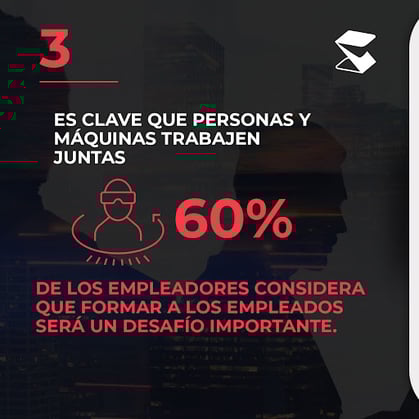 Source: Structuralia. Infographic: LThe Employment Revolution in the Coming Decade
The global civil engineering sector isn't cutting anyone any slack. For this reason, as a professional in this industry, you must stay up to date with this type of Trends in Civil Engineering that we've mentioned to you.
3. Current Demand for Engineers
In recent years, the civil engineering industry has undergone a radical transformation driven primarily by three factors:
-
-
Technological innovations that provide engineers with new types of highly sophisticated resources, such as automated tools and intelligent systems.
- Environmental regulations that are gradually changing the frameworks within which engineering and construction projects can be carried out.
-
The shift in social mindset that this requires to companies: more comfortable, eco-friendly, and sustainable.
-
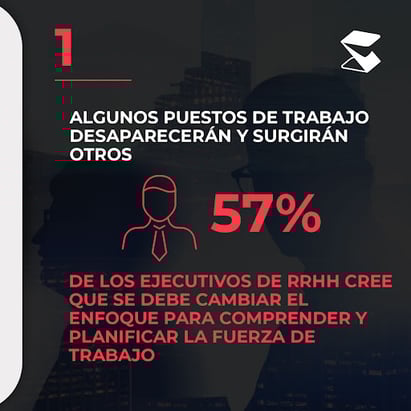
Source: Structuralia. Infographic: LThe Employment Revolution in the Coming Decade
In this context, companies are seeking non-traditional professional profiles. This is because Companies need civil engineers with in-depth knowledge of new technologies., and that are adapted to modern environmental and social requirements.
Therefore, The professionals who are currently dominating the civil engineering sector are those who are able to adapt to new construction methods., for which they must be specialized, for example, in one of the following areas:
-
- Structural Analysis
- BIM Applied to Civil Engineering
- Facility Management
- Sustainable Urban Infrastructure
- Smart Mobility
- Renewable Energy Plants (Hydrogen)
- Project Management
Your employability varies depending on your professional profile, so we recommend that you read our article Civil Engineering Jobs: The Most In-Demand Roles.
4. Challenges in 21st-Century Civil Engineering
In line with the previous point, civil engineering firms must have professionals with sufficient knowledge and technical expertise to enable them to be highly effective when to budget, plan, design, coordinate, execute, supervise y maintain the development of a building.

Given this whole situation, it’s important to keep in mind that civil engineering today is much more complex than it was a few years ago. The industry is placing increasingly high demands on professionals, who Throughout a project's entire life cycle, they must overcome a series of challenges caused by the modernization of the sector.
Among the main challenges we are referring to are the following:
-
- Infrastructure maintenance. The civil engineer must be able to perform maintenance on any infrastructure so that the building can exceed the service life for which it was designed. This means that the professional must provide solutions to address the deterioration of components and the external forces acting on the building, in order to predict, prevent, or correct structural damage.
- Industrialized construction. There are still companies that carry out their civil engineering operations manually. Meanwhile, other companies are implementing faster construction models through modular components that make it possible, for example, to set up an assembly line in record time. Your job as a civil engineer is to help the company you work for modernize its work methods and systems.
- The use of new technologies. Technological trends should be a top priority for all civil engineers. As a professional in the field, it is important that you adapt to an innovative ecosystem driven by disruptive phenomena such as the BIM methodology, the 3D printing, the big data, the smart roads and the smart cities.
- Environmental impacts. From the start of a construction project all the way through to its demolition at the end of its useful life, Energy consumption has a fairly significant environmental impact, fuel combustion, waste generation, water consumption, noise pollution, etc.
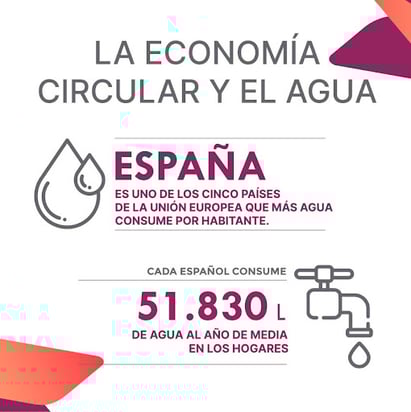
Source: Structuralia. Infographic. The Circular Economy and Water.
Your professional success as an engineer doesn't depend solely on your certifications, but largely on your ability to overcome the challenges of the industry. That's why you should read our article on the Major Challenges in Civil Engineering in the 21st Century.
Career Opportunities in Civil Engineering
Career opportunities for civil engineers are changing rapidly, keeping pace with the industry’s evolution driven by constant technological advances and market demands.

Companies need engineers who stay at the forefront of knowledge, tools, and methodologies. For candidates with this type of background, the doors will always be open at major engineering firms.
If you want to know which job profiles are in highest demand, read our article on job as a civil engineer.
1. What is the purpose of civil engineering?
The objective of civil engineering is to ensure that the construction of all types of infrastructure (houses, buildings, complexes, bridges, roads, aqueducts, etc.) is carried out using the appropriate materials (depending on whether the areas are seismic or not), that it is strong and durable over time, and that it complies with all applicable laws related to the type of project.
To this end, civil engineers must have knowledge of calculation, mechanics, hydraulics, physics y electronics, as well as in administration, project management y legal frameworks.
2. Departure of Professionals
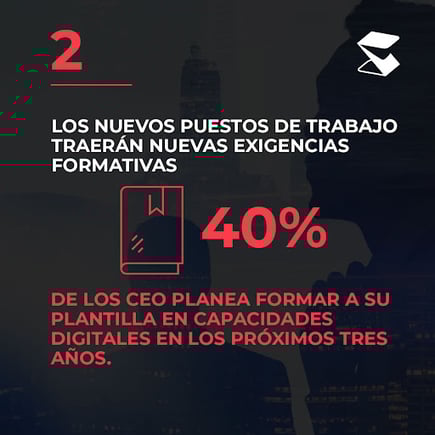
Source: Structuralia. Infographic: LThe Employment Revolution in the Coming Decade
A professional with up-to-date knowledge and specializations in civil engineering can work on a wide variety of projects. This is because Society needs experts who can contribute to its modernization through all kinds of construction projects civil engineering, water infrastructure, transportation infrastructure, urban services, etc.
In this context, a professional, depending on its specialization in civil engineering, can work as a consultant, manager, supervisor, teacher, researcher, expert, coordinator, and in many other roles in both the public and private sectors. Hence, the Civil Engineering Graduates is so varied.
3. Benefits of Studying at Structuralia
The Specializations for Civil Engineers The programs offered by Structuralia are widely recognized throughout Latin America, as they are supported by European institutions such as the San Antonio Catholic University of Murcia (UCAM) and the Da Vinci University of Mexico (UDAVINCI) The latter is considered the fourth-best business school.

The fact is that even though Structuralia has been operating in Latin America for six years, in Spain for more than 20 years, having graduated thousands of students from more than 60 countries, under the guidance of more than 500 professors who continue to play active roles in leading major engineering projects around the world.
If you'd like to learn more about the benefits our institution offers, read our article Structuralia, the best option for Latin American students.
4. Get an education with a scholarship
Structuralia's entire institutional culture revolves around the well-being and excellence of its students. For this reason, We strive to make our civil engineering programs as accessible as possible. To this end, we offer a comprehensive scholarship program made possible by our partnerships with institutions such as the Organization of American States (OAS), the Pan-American Association of Educational Credit Institutions (APICE), and the International Youth Organization for Ibero-America (OIJ).
Learn about all of our international and regional scholarships (by country) on our platform Structuralia Academy.

Source: Structuralia. Infographic: An Expert Perspective on the Future of STEM Employability
Our teaching staff is unique. A case in point is Mario Ferreiro Casal, who is our director of the Master's Degree in the Design, Construction, and Maintenance of Railway Infrastructure and Facilities, who is also member of the Board of Directors of the Spanish Transportation Association, and a renowned civil engineer specializing in railway engineering.
In our interview with Mario Ferreiro Casal, he tells us that demand for professionals trained in sustainable mobility is currently quite high, but that the supply is very low. Therefore, For engineers who wish to enhance their employability, pursuing graduate studies related to sustainable transportation is an excellent option..
«Spanish construction companies are a model of excellence, not only because we are the country with the second-longest high-speed rail network in the world, but also because, Civil engineering firms are among the best in the world.”
Mario Ferreiro Casal
Training Programs for the Civil Engineers of the Future
1. International Master's Degree in Geotechnical Engineering and Foundations
All types of terrain have an influence, to a greater or lesser extent, on the infrastructure built around them. Therefore, when planning a construction project, it is crucial to study the site and the potential interactions between it and the building, in order to deliver a sturdy structure that is well-suited to its surroundings.

The International Master's Degree in Geotechnical Engineering and Foundations It is designed to provide you with a detailed understanding of the impact that certain natural elements—such as soil, rock, and water, among others—can have on all types of engineering projects. Having this specialization will allow you to stand out in a society where, for example, complex underground infrastructure is becoming increasingly popular.
2. Master's Degree in Highway and Road Construction and Maintenance
One of the areas with the highest global demand in civil engineering is the construction and maintenance of roads, due to the modern world’s growing need for connectivity between different geographic regions, in order to open up new and improved land transportation routes for goods and people.
The Master's Degree in Highway and Road Construction and Maintenance It will provide you with all the necessary knowledge regarding excavation, blasting, earthwork, drainage for linear projects, structural calculations, road safety, and maintenance of road components, among other topics. With this specialization, you will become an essential asset for companies seeking to build, restore, or maintain roadways in accordance with the highest standards of modern engineering.
3. Master's Degree in BIM Applied to Civil Engineering
The Building Information Modeling (BIM) methodology is already part of the day-to-day operations of the most advanced engineering firms. Today, any civil engineer seeking to establish themselves as a highly competitive professional must, without a doubt, specialize in the use of BIM-based systems, tools, and work models.
The Master's Degree in BIM Applied to Civil Engineering It will equip you with all the necessary skills so that you can implement BIM at every stage of any type of construction project. This specialization will enable you to create highly accurate 3D models so you can identify potential problems early on, a goal that cannot be achieved in the same way using other engineering methodologies. That is why, thanks to this master's program, you will be a highly valued professional in the industry.
4. Master's Degree in Structural Analysis and Computational Software
Digital technologies used in civil engineering have become much more sophisticated in recent years. In fact, every year brings new updates, functionalities, and features to the computer systems used in areas such as structural analysis.
The Master's Degree in Structural Analysis and Software aims to update engineers' knowledge regarding the use of modern software specifically designed for structural analysis using the BIM methodology. With this specialization, Professionals will develop the digital skills needed to be at the forefront of technology engineering roles.
5. Advanced BIM Master's Degree in River Channel Modeling and Hydraulic Infrastructure
Hydraulic engineering projects require professionals who are highly specialized in state-of-the-art technologies, as these infrastructure projects are complex and have very specific requirements.
The Advanced BIM Master's Degree in River Channel Modeling and Hydraulic Infrastructure It is designed to teach the use of advanced technologies in combination with BIM methodology for the design, planning, and execution of water infrastructure projects. This specialization delves into the workflows involved in ensuring interoperability among different BIM tools, which are applied throughout all stages of hydraulic studies.
Specialized training through certified and globally recognized institutions provides a competitive advantage for professionals who have set their sights on joining and advancing within the most successful multinational engineering firms. In this context, The master's programs offered by Structuralia in Spain and Latin America serve as a springboard for civil engineers who wish to participate in increasingly ambitious projects.