Originally published on September 12, 2016; updated on September 3, 2025.
Learn about the the world's tallest communication towers, All of them are true marvels of engineering.
The World's Tallest Communication Towers
November 21 is the World Television Day, an occasion that invites us to reflect on the importance of this medium in our lives. The communication towers, colossal structures that define the skylines of major cities, are essential for television reaches millions of people around the world.
These structures not only represent an achievement in engineering and architecture, but they are also silent witnesses to the technological evolution that makes the transmission of television signals possible. In fact, projects such as The Bride Tower, considered the potential tallest building in the world, demonstrate the extent of architectural ambition and its impact on the urban landscape.
In this article, we'll explore the the world's tallest communication towers, highlighting its significance and its role in shaping the global media landscape.
Tokyo Sky Tree Tower
The Tokyo Sky Tree, located in Tokyo, Japan, is the world's tallest communications tower, with an impressive height of 634 meters. Opened in 2012, this facility not only serves as a television and radio broadcast center, but is also a a symbol of the country's resilience and technological progress. The tower is equipped with advanced earthquake-resistant technologies, underscoring the importance of engineering in creating safe and functional infrastructure. Furthermore, its design, which It brings to mind a samurai sword, making it a cultural icon that blends tradition and modernity.

Guangzhou TV Tower
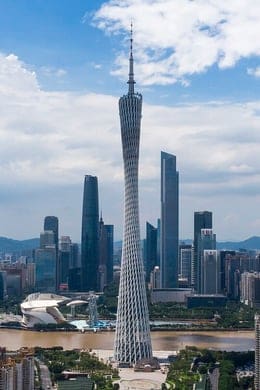
The Guangzhou TV Tower, located in Guangzhou, China, rises to 600 meters tall, making it one of the the world's tallest communication towers. This structure, completed in 2010, is known for its innovative design, which includes a «wasp-waist» figure» thanks to its slender central section. The tower not only serves as a transmission tower, but it is also a premier tourist destination, with an observation deck offering panoramic views of the city. The Guangzhou TV Tower is an example of how the modern architecture can be combined with the functionality to create buildings that are both functional and aesthetically pleasing.
CN Tower
The CN Tower in Toronto, Canada, was the world's tallest structure for more than 30 years, until it was surpassed. With 553 meters high, remains one of the the world's tallest communication towers. Opened in 1976, the CN Tower stands as a testament to the skill and ambition of Canadian engineers. This structure is essential to telecommunications in the region, and its famous The glass observation deck offers visitors a unique experience, by allowing them to «walk on air» more than 300 meters above the ground.

Ostankino Tower
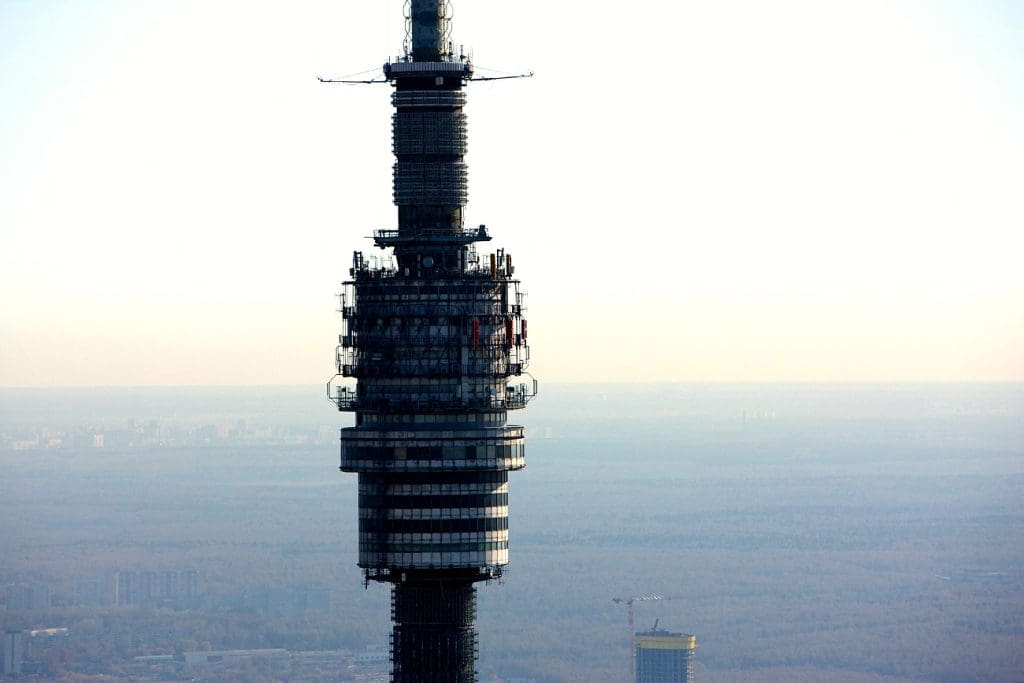
The Ostankino Tower in Moscow, Russia, is another of the the world's tallest communication towers, with a height of 540 meters. Built in 1967, it was the tallest self-supporting structure in the world at the time and remains a a key component in the transmission of radio and television signals in Russia.
Opened in 1967, the Ostankino Tower was designed by engineer Nikolai Nikitin, who drew inspiration from the shaped like an upside-down flower to create a structure that combines elegance and functionality.
This tower has not only been used to transmit television and radio signals, but it is also a tourist attraction, with an observation deck offering panoramic views of Moscow.
The architectural design of the Ostankino Tower is a marvel of engineering. Its main structure consists of a reinforced concrete core, which provides the stability needed to withstand the strong winds and earthquakes that could affect the region. The base of the Ostankino Tower, which covers a considerable area, ensures its stability, while its conical shape allows for even weight distribution, minimizing the risk of collapse.
Perla Oriental Tower
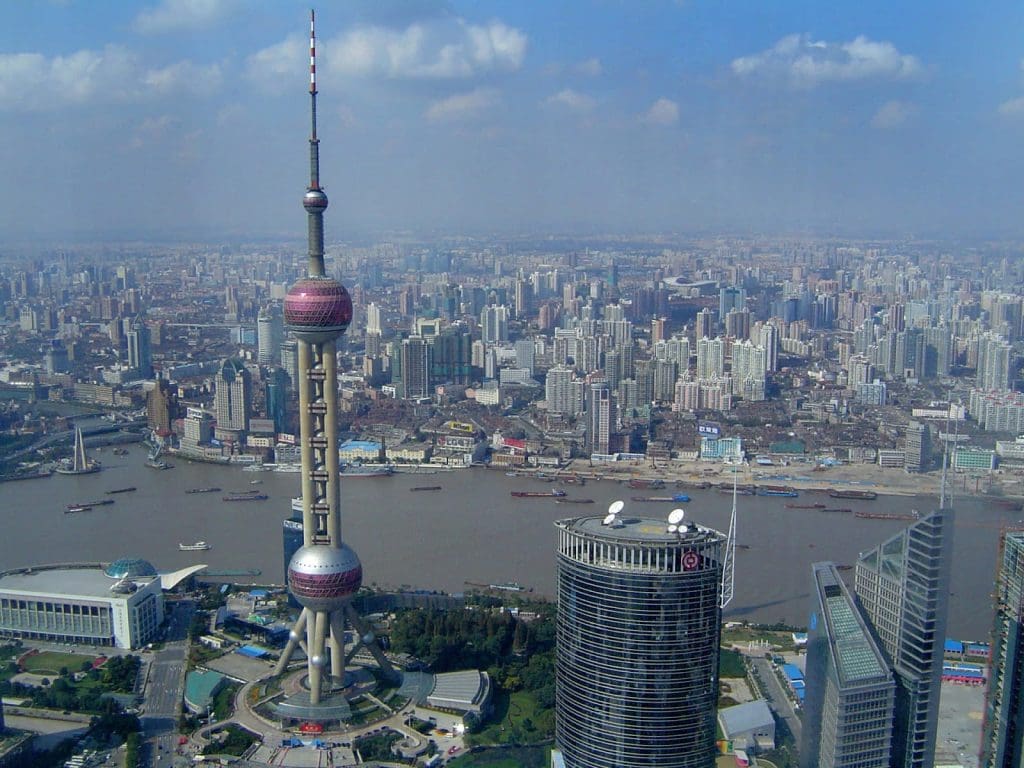
Finally, the Oriental Pearl Tower in Shanghai, China, with a height of 468 meters, is one of the the world's tallest communication towers and one of the city's most recognizable landmarks. Opened in 1994, this tower stands out for its futuristic design, which features illuminated spheres that appear to float in the night sky. In addition to its function as a communications tower, the Oriental Pearl is home to a museum of Shanghai's history and several observation decks that attract millions of tourists each year. This tower symbolizes China's rapid economic and technological growth in recent decades.
Warsaw Radio Tower
The Warsaw Radio Tower, also known as «Warsaw Radio Mast», was a monumental structure that held the title of the world's tallest tower for 17 years.
At 646.38 meters tall, it was the tallest structure ever built by humans from its inauguration in 1974 until its collapse in 1991. It surpassed the KVLY TV tower in North Dakota, and it wasn’t until the Burj Khalifa was built in 2010 that it lost its title as the world’s tallest building. It’s important to note that the two structures are completely different.
The Warsaw radio tower was designed by Jan Polak and built using a triangular steel truss structure. It was supported by a network of guy wires that anchored it to the ground. The question is: How could it not have collapsed when it weighed around 420 metric tons (roughly two-thirds the weight of the Statue of Liberty)?
Its main function was to serve as a telecommunications tower for transmitting long-wave broadcasts by the Polish state-run radio company, Polish Radio. Such was the reach of its signal that it is said to have reached remote places such as Antarctica.
What has become of the tower today? Well, as we’ve mentioned, the tower’s collapse in 1991 was a catastrophe that left only the concrete foundations, and the site where the tower once stood lay in ruins for many years. In 2021, the remains of the tower and its foundations were demolished. Today, only the base and the old propeller building remain as a reminder of what was once the tallest structure in the world.
KRDK-TV Tower, North Dakota, U.S.
The KRDK-TV Tower in North Dakota It is a telecommunications structure notable for its impressive height, although it is often confused with the nearby and even more famous KVLY-TV Tower.
The KRDK-TV Tower stands 627.9 meters (2,060 feet) tall. It is one of the tallest structures in the world and the second tallest in the Western Hemisphere, surpassed only by the KVLY-TV Tower, which is located a few kilometers away. Like the KVLY-TV Tower, its primary function is to serve as a transmission tower for the KRDK-TV station’s television signal.
It is important to note that KRDK-TV is often mentioned in the same breath as the KVLY-TV Tower. At 628.8 meters (2,063 feet), the KVLY-TV Tower was the world’s tallest structure from 1963 to 1974, when it was surpassed by the Warsaw Radio Tower, and again between 1991 (following the collapse of the Polish tower) and 2008, when it was surpassed by the Burj Khalifa.
Although they are not as well known as skyscrapers or major engineering structures, these guyed towers are impressive landmarks in the field of telecommunications and stand as a testament to the engineering required to ensure widespread radio and television coverage across large areas.
Conclusion
As part of World Television Day, celebrated on November 21, it is crucial to recognize the fundamental role that the world's tallest communication towers play a role in disseminating information and entertainment on a global scale. These structures are true marvels of engineering, which not only connect millions of people, but also represent the steady progress toward a more interconnected future.
As engineers and architects, We must remain at the forefront of innovation, without neglecting continuing education and specialization in areas that promote the development of infrastructure that benefits society.
Examples such as Caleido, Madrid's Fifth Tower, show how architecture and engineering continue to transform urban skylines with landmark projects that mark a turning point in our cities.