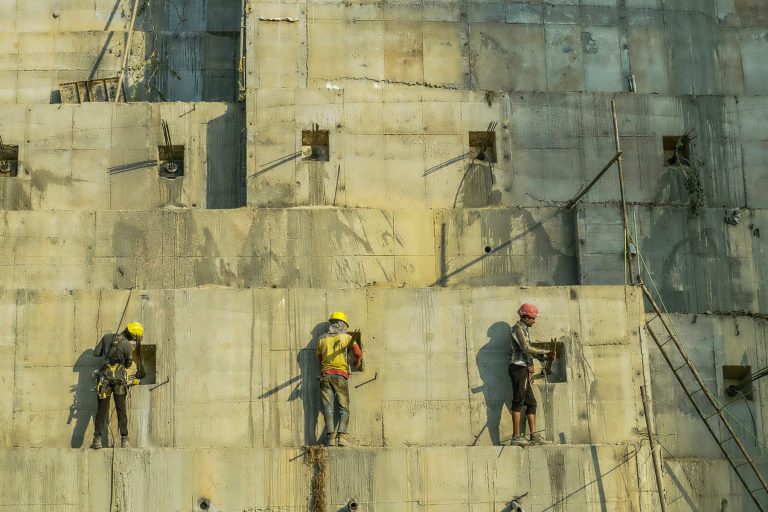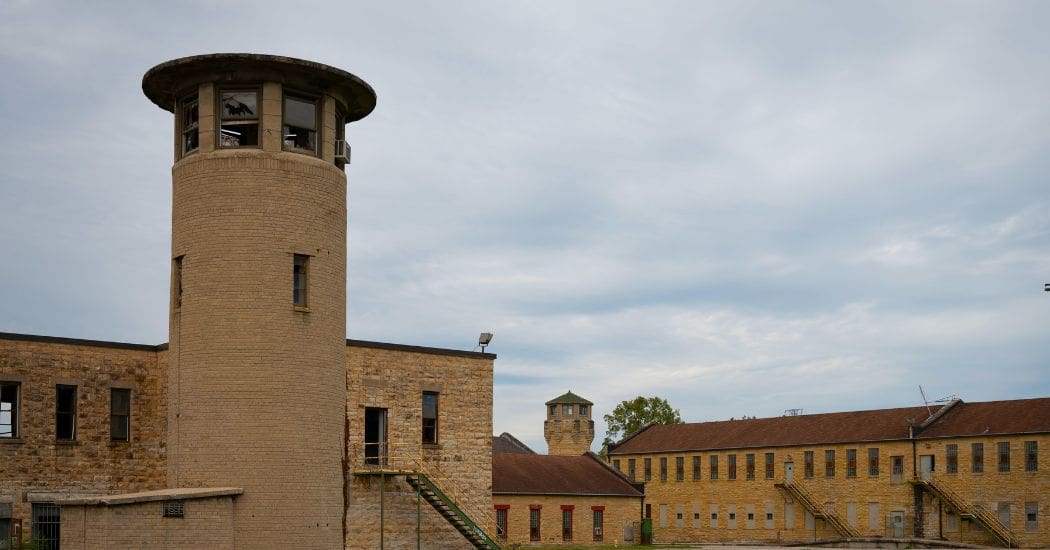
The study of historic buildings is not merely an exercise in contemplation, but an invaluable source of learning for architects and engineers. By analyzing iconic structures such as the panopticon, we can discover lessons and principles that, when applied today, not only enrich our creations, but they also allow us to design spaces that are more functional, sustainable, and people-centered. History shows us how Visionary ideas from the past have shaped our built environment, and it is our responsibility as professionals to keep this connection alive so that we can continue to innovate in the future.
The Panopticon: Origins and Historical Context
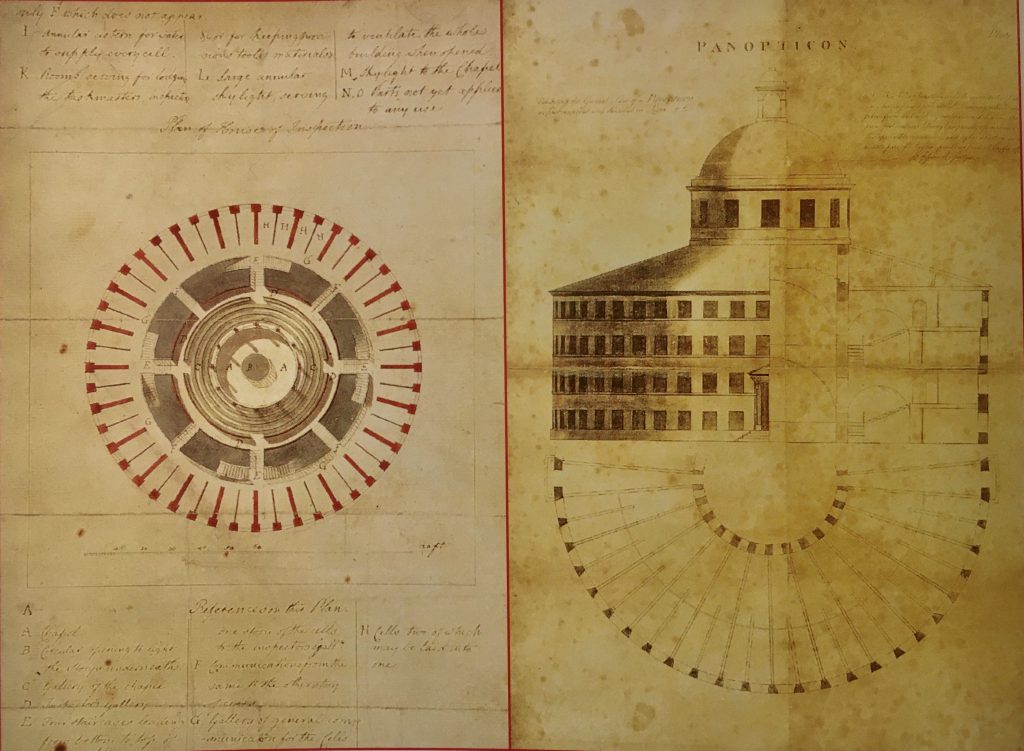
The panopticon, conceived by the English philosopher and jurist Jeremy Bentham Dating from the late 18th century, it is one of the most unique and controversial structures in the history of architecture. Bentham, known for his work in the field of social reform and the utilitarian theory, proposed a building design that would allow for complete supervision of its occupants from a single central location. This idea, originally designed for use in prisons, met the control and surveillance needs of the time, reflecting the social and philosophical concerns of the emerging industrial world.
The Architecture of the Panopticon: A Revolutionary Design
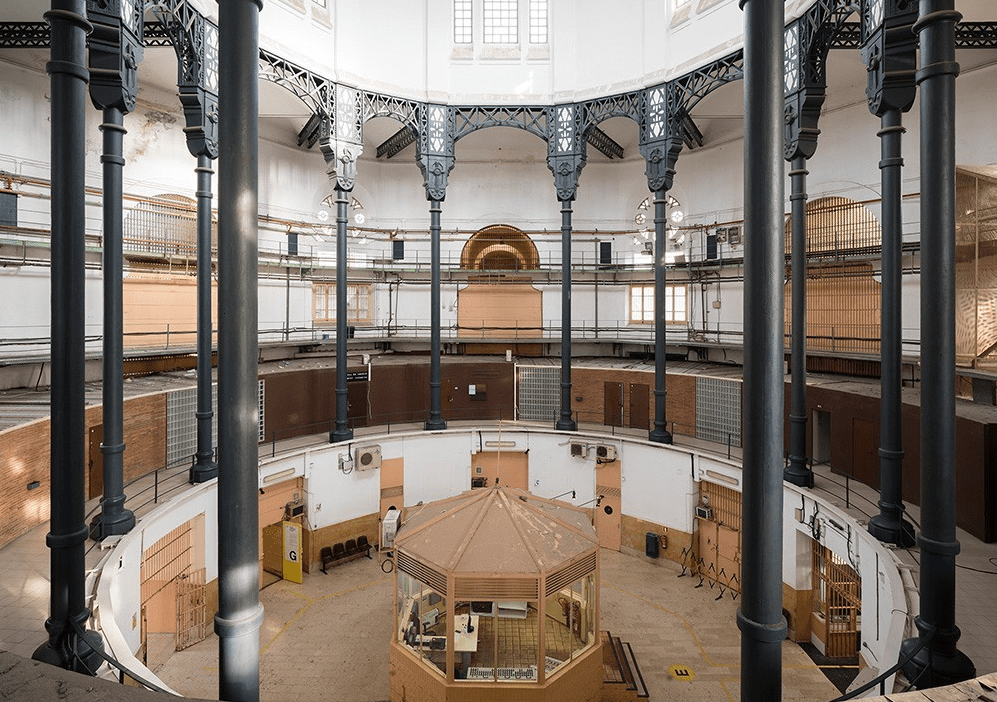
The design of the panopticon is a masterpiece of functionality, characterized by its circular layout, in which the cells are arranged around a central tower. This tower, with windows on all sides, allows a single guard to observe all the prisoners without being seen. The radial arrangement of the cells, combined with total visual control from the central tower, had a psychological effect among the inmates, who behaved in a disciplined manner given the constant possibility of being watched. The ingenious structure of the panopticon not only fulfilled its surveillance function, but also optimized the use of space and resources, making it an efficient model for its time.
From an architectural standpoint, the panopticon is an example of how the forma follows the function to an extreme degree. Every element of the design is geared toward achieving a specific goal: uninterrupted surveillance. However, the simplicity of the concept contrasts with the complexity of its execution, requiring precision in construction to ensure visibility and control from the center to every point of the structure. This concept of centralization and control in architecture influenced not only the construction of prisons but also other types of buildings, such as hospitals and schools, where supervision was a primary concern.
The Panopticon in Contemporary Architecture
The Impact of the Panopticon on modern architecture It is undeniable. Although the original model was designed for control contexts, its principles have been reinterpreted and adapted to contemporary needs. Today, as architects, we can learn from the clarity and purpose of the panopticon when approaching our own projects. The centralization of functions, the optimization of space, and the influence of design on human behavior are concepts that we continue to apply, albeit in a more nuanced and sensitive to meet new demands for privacy and well-being.
The main lesson we can learn from the panopticon is the importance of design with a clear purpose and mindful of the impact our buildings will have on the people who live in them. As we move toward a future where technology and sustainability are paramount, reflecting on buildings like the panopticon reminds us that Design must go beyond mere aesthetics and functionality, while also taking into account the ethical and social implications of our architectural decisions.
In short, the panopticon It's not just a historical curiosity, but rather a source of valuable lessons for today's architects. It invites us to reflect on how the Design influences human behavior and how our architectural decisions can contribute to a more equitable and socially conscious society.
In this regard, it is essential that, as professionals, we continue to pursue ongoing training and specialization in areas that not only make us better architects and engineers, but also contribute to the the development of a more just and sustainable society. We invite you to explore the catalog of online courses and master’s programs offered by Structuralia, which focus on engineering and innovation, to continue expanding our knowledge and skills in creating the spaces of tomorrow.