
People Analytics in Human Resources Departments It contributes to optimal employee and company performance through more strategic decision-making.
What do human resources managers need to perform their duties more effectively and strategically? Is knowledge of management alone enough to meet the needs of both employees and the company? Professionals can leverage the benefits of metrics and analytics to develop their skills with as little risk as possible.
Creating positive employee experiences, effectively attracting new talent, retaining current employees, planning for the company’s growth, and making important decisions are tasks that can be easier to carry out if you take advantage of technological tools and data. At PHAROS’s latest live event: «»People Analytics: Analytics, Applied Science, and Data in Human Resources" its Attendees learned firsthand how to optimize human resources operations in a precise and productive manner. Emilio Velasco A business consultant and expert in People and Marketing Analytics as well as digital entrepreneurship, he was the expert who presented on the topic.
One of the main points Emilio made is that People Analytics It is the cornerstone around which the entire company must revolve, helping in a simple way to create predictive scenarios. This article outlines the main points of the event, its stages, and the benefits of this science as applied to human resources, organized into four sections.
What Does People Analytics Mean for HR?
The expert cites the Corporate Research Forum, in his definition of this specialty, where he states that: «People Analytics is not just about discovering data, but also about interpreting it and drawing meaningful conclusions.». As for its role in Human Resources, its importance lies in facilitating decision-making and generating the necessary insights to guide the company’s organizational behavior. He then provided an introduction to the benefits of analytics for HR:
- Improves decision-making: evaluating an employee's performance, identifying critical issues, pinpointing difficulties in performing tasks, and optimizing processes.
- Improve the quality of the data provided: Intelligent data processing to create competitive experiences for the company's employees.
- Creating positive experiences for employees: The data makes it possible to tailor our approach to meet the specific needs of each employee: salary, work schedules, available technology, etc.
- Aligning Human Resources with the business's strategic direction: Measuring implemented processes and optimizing them as needed to carry out activities.
- More Effective Design of Human Resources Processes: giving more attention to key aspects of the organization, such as listening to employees, understanding them, and addressing their needs.
Part of this process must be supported by a robust database infrastructure.
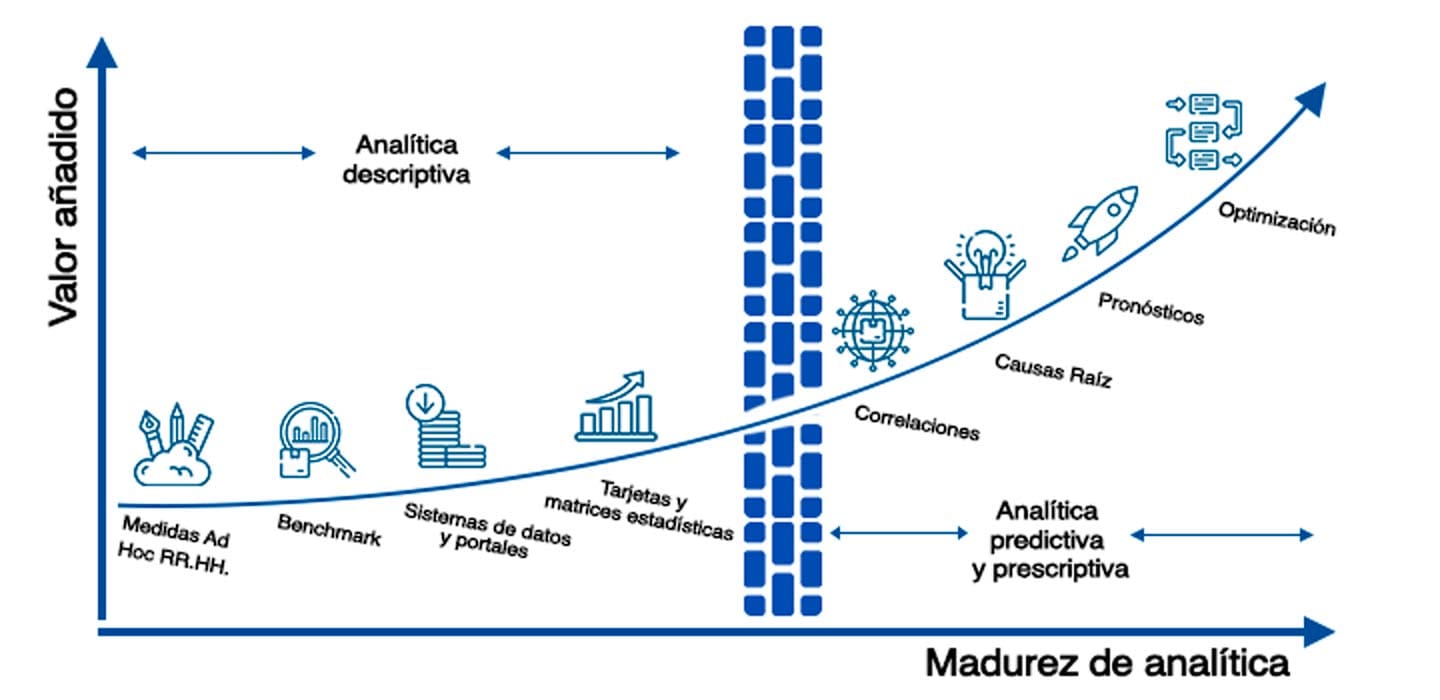
The 8 Stages of Analytics Maturity in Companies
Reaching the most advanced stage of human resources analytics in a company involves an 8-stage evolution:
- Ad Hoc HR Measures: Reports requested among employees within the same company to demonstrate results and make decisions. Information is passed from person to person.
- Benchmark: A comparison of the effectiveness of projects carried out by a company for process analysis and the level of efficiency achieved. This helps in making sound decisions for future projects. It can also be used to make comparisons with other companies and their processes.
- Data systems and portals: databases and servers where professionals can access centralized information.
- Statistical charts and tables: Immediate access to clear information on key aspects of the organization as a whole: performance metrics, employee surveys, customer reviews, and more.
Stages of Maturity for Analytics in HR: Webinar Excerpt
How can you measure the effectiveness of Human Resources processes?
It is possible to measure performance in the HR department using various metrics established for that purpose. According to the expert, these are some of the most essential ones:
Recruitment:
- Offer acceptance rate: the percentage of candidates who accept a job offer. Recruitment effectiveness and the ability to attract new talent.
- Average time to hire: the average time it takes to hire a new employee, from the date the job posting is published to the start date. It measures the efficiency and speed of the recruitment process.
Development and Training:
- Participation in training programs: percentage of employees who participated in training programs; that is, the organization's commitment to investing in training and employees' willingness to improve their skills.
- Financial Return on Investment in Training Programs: comparing the benefits obtained and the costs incurred.
Check out all the Human Resources metrics in the full webinar recording below:
The 4 Steps of a Recruitment Process and the Variables Based on Analytics
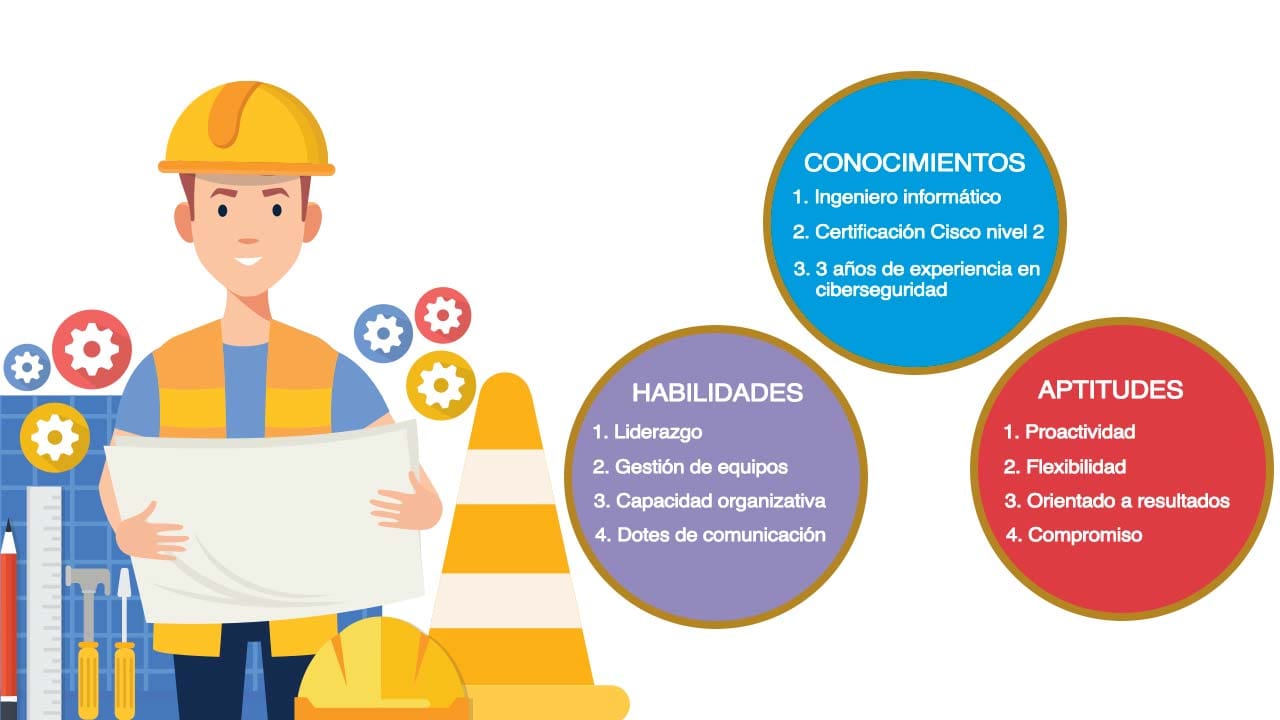
The expert visually illustrated these processes, beginning with the breakdown of the job into variables:
- Knowledge: academic credentials, formal education, prior experience.
- Skills: informal learning, short-term certifications, organizational context, and previous tasks performed.
- Attitudes: the candidate's personal values.
Step 2 involves setting filters and thresholds, which are divided into two scenarios:
- Binary variables: essential requirements for a job position.
- Continuous variables: minimum skills, experience, and knowledge that a candidate must possess, but which become more relevant when the candidate has a higher level of proficiency than that required for the position.
Finally, steps 3 and 4 involve assigning weights to the above variables to guide the recruiter’s decisions—whether in evaluating candidates, eliminating those who do not meet the criteria, or selecting the most suitable candidates.
At Structuralia, we are committed to organizational development, which is why we regularly create new video conferences developed by experts from digital transformation y human resources, featuring the most interesting topics based on current trends for human resources managers and training specialists in the engineering, construction, energy e infrastructure. This ensures that professionals have the most up-to-date tools to support the growth, development, and transformation of their companies, enabling them to adapt to the demands of today's business models.
If you want to know how PHAROS We can help you and provide comprehensive solutions for your employees' professional development through our comprehensive professional training service. You can sign up here. More than 1,000 specialized courses created by more than 550 active experts, with more than 100 companies already participating.
Fill in your information to access the full recording of the event: «People Analytics: Analytics, Applied Science, and Data in Human Resources»