Originally published on April 1, 2022; updated on August 16, 2023
Why does steel rust? Learn about the causes of stainless steel rust and tips for preventing it.
Reasons Why Steel Rusts and Solutions to Prevent It
Although stainless steel is one of the most widely used materials in construction, Steel rusts and it's almost inevitable. In this article, we discuss the reasons and the causes that cause oxidation, taking into account how the type of steel, corrosion, and other related factors influence this process. We’ll also provide recommendations for prevent this from happening as much as possible oxidation, in order to extend the service life of a material that is as reliable as it is highly recommended.
Why does steel rust?
To clarify the reasons Steel rusts Even though it is “stainless,” we first need to understand what this term means. It is called stainless to formed steel consisting of a steel alloy with a minimum of one 12 % of chromium and, on occasion, contains nickel or molybdenum.
Let's imagine that stainless steel is like a layer cake; the reason chromium is used is that, when it comes into contact with oxygen, it creates a rust coating, known as passive layer, which protects the inside of the “cake.” In the center of the cake, we have a inner layer of ordinary steel, which oxidizes easily in the presence of oxygen and other abrasive elements.
Now, let's consider that the passive film It's like a suit of armor that protects the cake. If the armor is intact, the cake is protected and does not rust. However, there are some situations in which the armor can weaken or become damaged, allowing oxygen and other elements to react with the steel inside, causing oxidation.
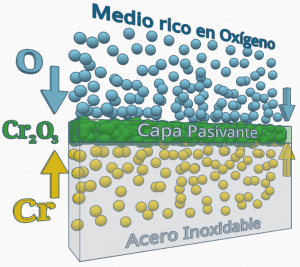
Graphical diagram of the composition of stainless steel. vsmabrasivos.com
How does stainless steel oxidize?
Stainless steel produces this green patina that does not increase in volume. The process known as stainless steel regeneration It refers to how the patina can be removed for aesthetic reasons, but it will gradually develop again.
In the case of carbon steel, its reaction with oxygen produces iron oxide which expands, cracks, and flakes off. The protective layer of stainless steel must not be removed to prevent all of the above.
Causes of Stainless Steel Corrosion
There are several situations that compromise or damage the passive layer, which is why the steel rusts even though it is protected:
1. Pollution
If there are contaminants in the environment—such as salts, acids, or harsh chemicals—they can damage the passive film. Imagine if someone spilled tomato sauce on the cake; that would damage the protective coating.
2. Scratches and abrasions
If stainless steel is scratched or abraded, the protective layer can be damaged. Scratches are like cuts in the cake’s crust, leaving areas exposed to oxygen and other oxidizing agents.
3. Prolonged exposure to extreme conditions
Stainless steel is corrosion-resistant, but it can deteriorate if exposed for long periods to extreme conditions, such as high temperatures, high humidity, or saline environments. These conditions can weaken the passive film and allow oxidation to occur.
4. Improper Welding
During the stainless steel welding process, areas with lower chromium content may form in the protective layer, which weakens the passive film and increases the likelihood of oxidation.
5. Poor maintenance
If proper maintenance—such as regular cleaning and thorough drying—is not performed, dirt, grease, or moisture can accumulate on the surface of the stainless steel, which could damage the passive film and lead to rust.
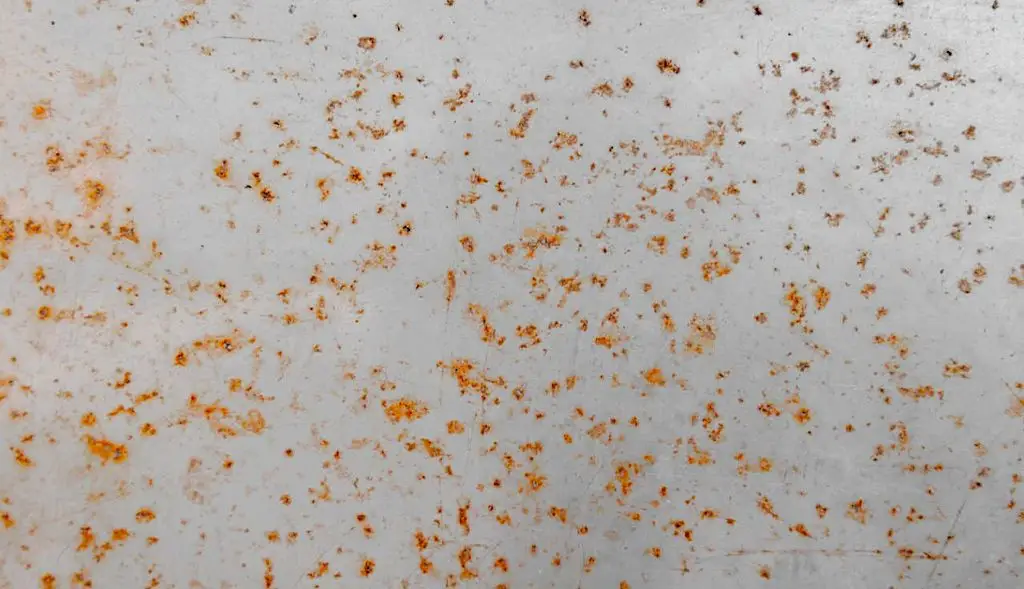 Image showing how steel rusts even though it is a sheet of stainless steel. cga.com.co
Is it possible to prevent stainless steel from rusting?
Yes. In fact, we outline the most effective recommendations for achieving this in the following list:
- Clean stainless steel regularly with water and mild soap to remove accumulated dirt, dust, and grease that could weaken the passive film.
- Use cleaning products specifically designed for stainless steel and Avoid using harsh or abrasive chemicals that could damage the protective passive film.
- After cleaning, be sure to thoroughly dry the stainless steel surface to prevent moisture buildup, since prolonged exposure to moisture can weaken the passive film.
- If stainless steel is exposed to corrosive environments, such as marine areas or areas with high humidity levels, consider the application of additional protective coatings, such as anti-corrosion paints or specialized protective coatings.
- Avoid leaving standing water on the surface of stainless steel, as it can cause localized corrosion. Make sure the water can drain properly and prevents puddles from forming.
- During welding processes, Use the proper techniques and be sure to protect the surrounding areas with inert gases or protective materials to minimize the formation of areas with lower chromium content in the protective layer.
- Perform periodic inspections to detect possible damage, scratches, or corroded areas on the stainless steel. The sooner these problems are identified, the easier it will be to take corrective action.
- Avoid direct contact between stainless steel and corrosive materials such as acids, salts, or harsh chemicals. Whenever possible, use appropriate protective or separating barriers.
Such a fascinating topic may have piqued your interest. Learning from Structuralia is always a great help to professionals. After confirming that the steel is rusting, it would be a good idea to check the type of steel installed and the corrosion class, expanding knowledge on this very interesting topic.
Next, we must implement preventive measures, such as the cleaning, to extend the useful life of such an essential material. By following the recommendations above, we can delay rusting and detect it more easily.