
The challenges posed by the slope bridge supports These should not be underestimated; here are the factors you should consider.
Bridge Abutment on a Slope: Engineering on Steep Slopes
Bridges are vital structures that connect different geographic locations, overcoming natural obstacles such as rivers, valleys, and ravines. However, the construction of this infrastructure features numerous technical challenges, especially with regard to the bridge abutments on a slope. The stability of these supports is crucial to the integrity of the bridge, and this task becomes even more complicated when it comes to slope supports. Steep slopes introduce a series of geotechnical problems that require innovative and well-founded solutions to prevent landslides and ensure the bridge's durability.
What Is a Slope?
A slope is a an inclined surface that may be natural or man-made. In the field of civil engineering, a slope can be found in road closures, construction sites, and on mountainsides where infrastructure such as bridges and tunnels is built. The slope and stability of a slope are determined by factors such as soil composition, water content, and the external forces acting on it. Proper management of these factors is essential to prevent landslides and other problems that could compromise the safety of structures built on or near these slopes.
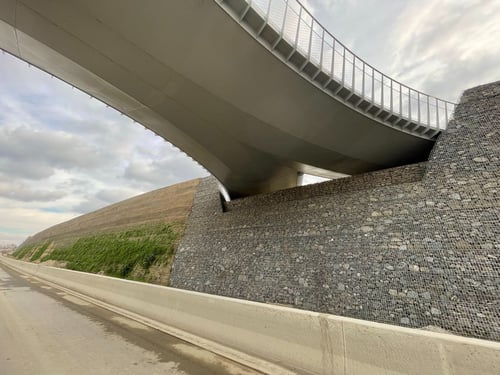
Considerations for Slope Bridge Supports
Bridge abutments on slopes require meticulous planning and a multidisciplinary approach. The following are several key considerations that must be taken into account, along with explanations:
1. Detailed Geotechnical Study:
It is imperative to conduct a comprehensive geotechnical study of the area where the bridge is planned to be built. This study must include an evaluation of slope stability, soil characterization, and the identification of any potential landslide risks. The information obtained will enable the design of appropriate solutions for supporting the bridge on the slope.
2. Design of Deep Foundations:
In many cases, bridge abutments on slopes must be deeply founded to reach more stable soil layers. Deep foundations, such as piles or caissons, provide greater stability and reduce the risk of landslides by anchoring the structure in more resistant soil strata.
3. Effective Drainage Systems:
The water management It is essential for maintaining slope stability. The implementation of appropriate drainage systems, such as underground drains and surface linings, helps reduce water pressure in the soil and prevents saturation that could trigger landslides.
4. Slope Reinforcement:
In some cases, it may be necessary to reinforce the slope to provide secure support for the bridge. This can be achieved through techniques such as installing anchors, using reinforcement mesh, or constructing retaining walls. These reinforcements help stabilize the slope and better distribute the loads imposed by the bridge.
5. Continuous Monitoring:
The stability of the slope and the performance of the supports must be continuously monitored, both during construction and during the bridge’s operation. The use of monitoring instruments, such as inclinometers and piezometers, makes it possible to detect movements or changes in water pressure that could indicate imminent problems, allowing for timely intervention.
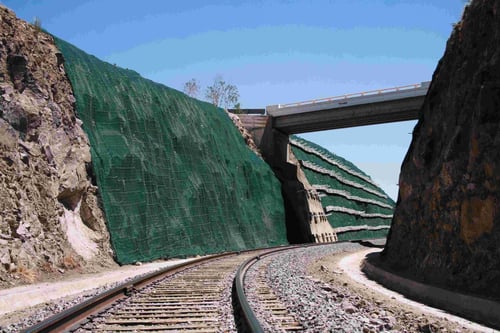
The construction and design of bridges on steep slopes present unique challenges that require a comprehensive and well-founded approach. Engineers must consider multiple factors, ranging from geotechnical studies to continuous monitoring, to ensure the stability and safety of these structures. Slope bridge abutment It requires not only technical knowledge, but also a careful planning and the implementation of innovative solutions. We invite all professionals in the field to continue exploring these topics and to learn about the courses and master’s programs offered by Structuralia, such as the International Master’s in Geotechnical Engineering and Foundations, taught by the industry’s leading experts.