
Originally published on July 27, 2020; updated on April 27, 2023
BIM Mexico: Mexico is taking firm steps toward the full implementation of BIM, which it expects to achieve by 2023.
Governments around the world are embracing technological innovation. The trend set by countries such as the United Kingdom and Spain, of make BIM mandatory for all public works projects, is proving to be the right decision, as more and more countries are joining this initiative. We specifically analyze the situation of the BIM in Mexico.
This is the case in Mexico, which is following in the footsteps of its neighbors—Colombia, Chile, and Argentina—in enacting legislation on the BIM implementation. These three countries are leading the way in the application of this methodology in South America, and now Mexico is beginning to set the government machinery in motion to accelerate the adoption of BIM in the public works construction sector.
In the academic sphere, they have taken the first steps by introducing BIM as a Required Course at universities such as the Tecnológico de Monterrey, the Universidad Iberoamericana, La Salle University, UNAM, and the Autonomous Universities of Yucatán, Chihuahua, and Nuevo León. This is followed by the private construction sector, where multinational companies have begun importing technical expertise to apply it to projects throughout the country, particularly in Mexico City.
BIM in the Private Sector
As is the case in almost every country, the private sector takes the lead in capitalizing on the potential benefits of a new technology and takes the risk of adopting it in order to stay ahead of the competition.
The same thing has happened in Mexico, where the case of the Spanish multinational stands out Bovis, who have been responsible for developing four major projects within the Central American country, setting the standard and demonstrating the benefits of technologies such as BIM in Mexico.

Source: https://www.bsigroup.com/
A data center for Bancomer in Atizapán, the Rubén Darío Building in Polanco, and Torre Reforma have served to inspire and demonstrate to Mexico’s construction sector that the BIM methodology It's already a reality, and it's here to stay.
In particular, the Chapultepec Tower One, the most recent completed project by Bovis in Mexico City, in March 2018, and today, the flagship of the BIM Development in Mexico. This tower required the collaboration of at least ten specialized companies, which could only be coordinated using BIM tools, such as those provided by Autodesk (Revit) and Tekla.
Following this initial foray into the Mexican market, Bovis It confirms its commitment to creating programs that promote the country's development in this field through projects of this kind, which have undoubtedly positioned Mexico among the leaders in architecture, engineering, and construction in Latin America.
BIM Mexico: MIC Strategic Plan
The government has also stepped up its efforts after seeing the results being achieved in the private sector, which has led to the development of a strategic plan to establish standards for the use of BIM, or Building Information Modeling (MIC), within the public construction.

Source: https://www.nora.com/
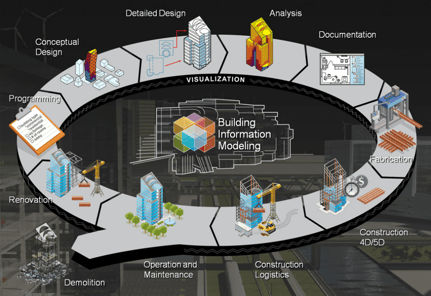
The so-called “Strategy for the Adoption of Building Information Modeling (BIM) in APF Infrastructure Projects” sets forth the goal of transitioning from traditional methodology to BIM across all sectors in which public infrastructure projects are carried out, based on a strategic plan with the following objectives:
1. Promote the use of MIC in infrastructure projects
The public and academic sectors will establish working groups to design and implement regulatory mechanisms that will enable the implementation of the MIC, first within the various agencies and subsequently at the federal level. At the same time, efforts will be made to promote training programs for civil servants, and to promote it as a working methodology.
2. Improve public infrastructure project processes through the use of methodology and technological tools
The public sector It will be responsible for implementing “pilot” projects that serve as a guide, and will document them, with the aim of optimizing current workflows, improving communication mechanisms for implementation, and enhancing transparency in public infrastructure projects.
Source: www.kaizenai.com
3. Promote the involvement of the private sector and other organizations in the strategy to complete the value chain (Recommendations)
The private sector will be called upon to increase the human capital supply promoting certifications and the development of national standards that enable the consistent use of the MIC.
4. Use the results of the methodology's implementation to drive continuous improvement in the infrastructure
The results and improvements from the implementation of BIM in Mexico will be continuously monitored, and tools will be developed to facilitate long-term planning. At the same time, efforts will be made to promote the application of this methodology in national infrastructure projectsl, based on an analysis of international experience.

Source: www.sbci.com
Where can you learn BIM?
If you want to master this discipline, there are many options for learning more about it. For example, there are online courses that will allow you to gain the necessary knowledge while balancing your professional and personal life.
That said, if you want to get the best training and become a highly sought-after professional, we recommend that you check out our selection of advanced courses. At Structuralia, we offer a wide range of Master's Programs in BIM fully up-to-date and in line with the industry's needs.
These master's programs are taught by specialized professionals in the field of infrastructure, with both a theoretical and practical approach, in order to acquire the knowledge necessary to develop projects of all kinds.
How do master's programs in BIM work?
If you're thinking about studying BIM methodology at a more professional level, Structuralia's master's programs in BIM are the best option for specialized training. These courses consist of various subjects, ranging from basic terminology ranging from BIM to more complex topics such as project design, so that real and optimal results can be achieved.
In addition, these courses explore concepts such as project planning and their implementation using BIM tools. Topics such as data and resource management to achieve better results.
Here are some of the master's programs we currently offer:
As you can see, there are many options available to you if you want to master this technology with us. ¡Ask us for more information and start learning one of the most in-demand tools today!
Where can BIM be applied?
BIM is one of the most in-demand tools in today's job market. Here are some of the sectors where you can put it to use:
-
Construction Industry: In the construction industry, BIM has become an indispensable tool for designing buildings and infrastructure projects. BIM models help optimize the time spent on projects and reduce unnecessary costs.
- Architecture: Architecture is another field where the use of BIM is in high demand. Professionals familiar with this methodology are able to develop highly complex models and projects quickly and efficiently.
- Planning: BIM is also useful for real-time project planning. This allows professionals to track the data collected during the design phase, as well as any changes to that data.
-
Engineering: Civil engineering has also benefited greatly from the use of BIM. This technology has enabled better control over construction processes, as well as greater precision in the fabrication of structural components using strong and durable materials.
In short, BIM is an indispensable tool for tackling any type of project in construction, architecture, or engineering. If you want to become a highly sought-after professional and master this methodology, contact us and learn more about our educational offerings.
BIM and Structuralia: The Perfect Combination
What will you learn in our Master's Programs in BIM? At Structuralia, we'll teach you everything you need to know to apply BIM methodology: from its definition to the tools and techniques used to carry out your projects. You'll also learn about BIM project planning and management, as well as the necessary documentation.
In addition, you'll have the opportunity to learn about the 3D modeling y specific software related to BIM, as well as the administration of a project from its initial stage through to completion.
You'll also learn about the best practices To improve the quality of your projects and optimize your time and costs, you'll learn how to work collaboratively with BIM software and the main standards related to architectural design.
Don't waste any more time—join the program and start your training!