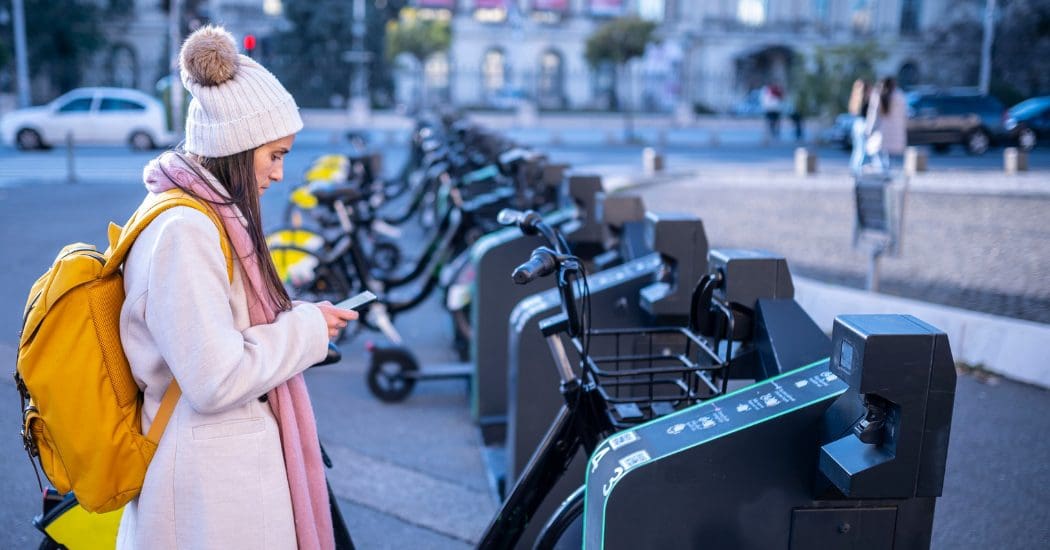
The problem of high pollution levels in large cities is becoming increasingly prevalent. For this reason, government agencies are working to reduce emissions of particulate matter.
In this regard, when we talk about pollution in the city, one of the main contributing factors is vehicle traffic. The enormous number of trips made every day in a metropolis has a huge impact on the air quality that we breathe.
Therefore, the necessary measures must be taken to promote the use of alternative transportation systems environmentally friendly. These actions are what is meant by sustainable mobility and there are many ways to implement it.
Sustainable Mobility Around the World
The need for large cities to reduce pollution and improve the air their residents breathe has led to the creation of action plans to promote sustainable mobility. Below are some of the plans currently being developed:
1. Amsterdam
Amsterdam has been promoting cycling for many years. Currently, about 60% of all trips in the city are made by bicycle, and to make this possible, they have more than 400 kilometers of lanes exclusively for cyclists.
In addition, the program Clean Air 2025 Its goal is to eliminate CO2 emissions associated with vehicle transportation. To achieve this, measures are being taken such as replacing buses with zero-emission models, renewing the taxi fleet, and restricting polluting cars to certain areas.
The use of electric vehicles will also be promoted through subsidies, tax credits, and the installation of 4,000 electric charging stations around town.
2. Copenhagen
Just like the capital of the Netherlands, Copenhagen serves as a model to look up to when it comes to sustainable mobility. It is estimated that every day, its residents They cycle more than one million kilometers. The bike lane network extends over 350 kilometers, and the infrastructure is well-designed and safe.
In addition, it aims to be the First Carbon-Neutral City, which means that all the energy used is generated by or offset with renewable energy systems. To reach this milestone, the plan is to use public vehicles that do not emit CO2, increase by 20% the number of passengers using public transportation or ensuring that half of all trips are made by bicycle.
3. Hong Kong
As one of the most densely populated cities in the world, transportation plays a very important role in Hong Kong. For this reason, the government has been taking measures for several years now to reduce pollution and make the city more environmentally friendly.
Streets have been pedestrianized, public transportation options have been expanded—especially rail service—and accessibility has been improved. In addition, the purchase and use of electric vehicles by suspending the registration tax.
4. Mexico City
For the past few years, Mexico City has been taking all necessary measures to stop being one of the cities with the worst traffic congestion and highest levels of pollution.
The recent announcement of the ProAire plans has led to significantly reduce its pollution levels and CO2 emissions. This has been achieved by closing factories, banning cars from the metropolitan area one day a week, and using rapid transit buses or the conversion of numerous streets in the city center into pedestrian zones.
In addition, Mexico City has joined Paris and Athens in committing to a ban on diesel vehicles starting in 2025.
5. Seoul
The South Korean capital has nearly 10 million residents, who are estimated to spend an hour and a half a day commuting by public transportation. Because of this, it is necessary to take measures to improve mobility in the city.
The renewal of the city bus fleet carried out in the previous decade has succeeded in reducing by 35% Emissions carbon dioxide, a 20%: the NO2 ones and a 40%: Pollutant Particles.
Currently, a plan aimed at 2030 calls for doubling the city’s pedestrian areas, introducing a network of free bicycles, and reducing unnecessary travel. In addition, it features a real-time information and data system that helps ensure the smooth operation of public transportation.
Ultimately, the future depends on respect for the environment, and that is why there will be more and more environmentally friendly transportation plans that are popping up in cities. Don't get left behind—specialize in sustainable urban mobility with one of the available courses.
Learn about the concept of houseboat as a prototype of sustainable architecture.