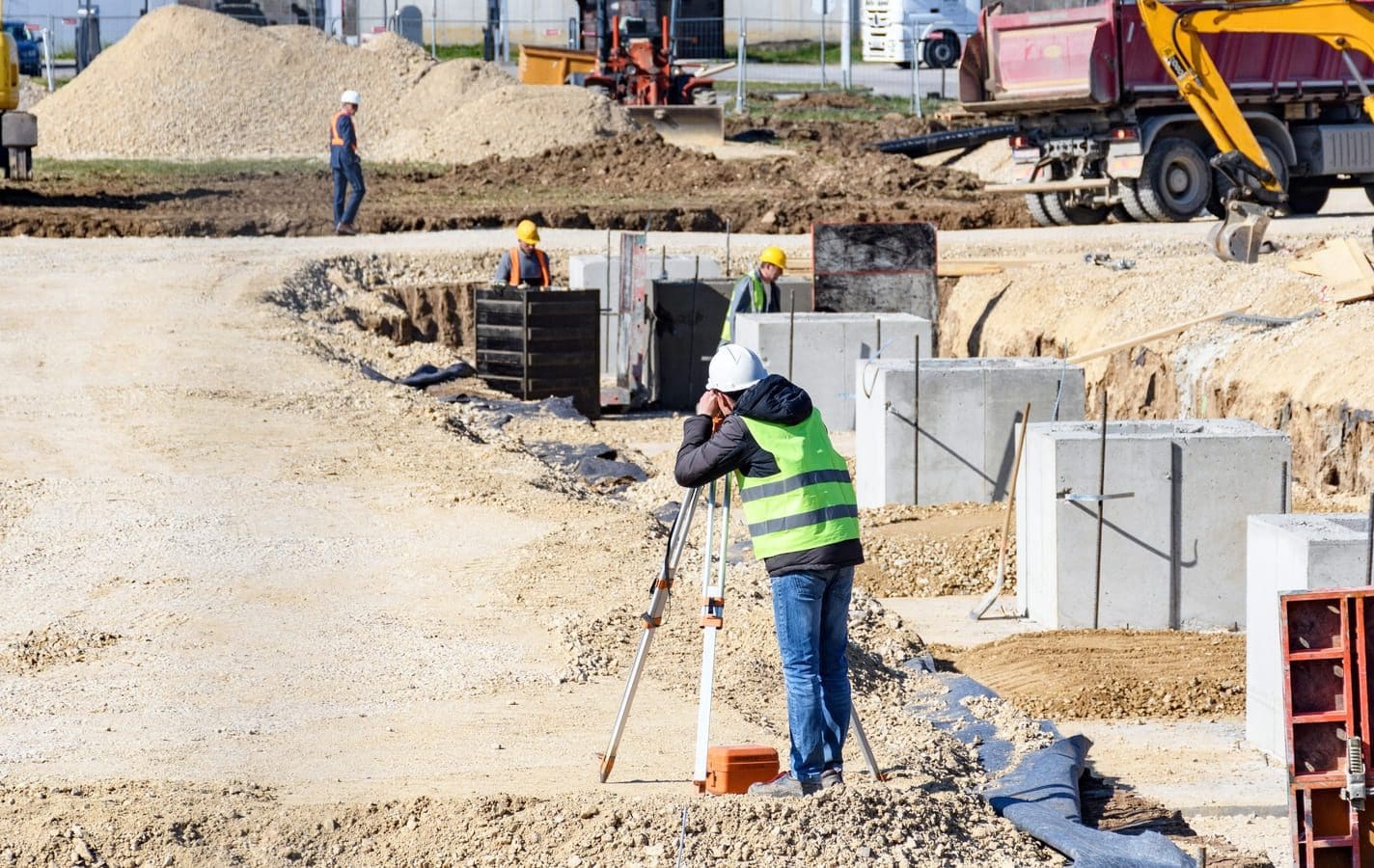
Every conceivable type of civil engineering structure to date rests on the ground or interacts with it in some way. Therefore, it is essential to perform a proper soil mechanics study when designing or building.
But, What is soil mechanics? Given this premise, we must understand that soil mechanics is the branch of science that studies the mechanical behavior of soils; subsequently applied to the design of civil engineering structures. This allows engineers to understand the type of soil they will be dealing with and that the proposed structure will have to contend with.
Introduction to the Study of Soil Mechanics
This branch of engineering emerged around 1925, pioneered by Karl von Terzaghi, known as “the father of geotechnical engineering and soil engineering,” who, through his research and publications, succeeded in establishing the importance that the field holds today, Soil Mechanics and Its Study.
The soil mechanics study and testing are reflected in a document prepared by a specialized engineer, and provides insight into the basis for construction projects, that is, the physical and mechanical properties of the soil where construction will take place, as well as its composition, characteristics, classification, and behavior under the influence—or absence thereof—of a specific load.
Soils, by their very nature, tend to be quite diverse and uneven, which makes each case study unique; if a proper soil mechanics analysis is not conducted, the planned engineering project may develop serious structural defects and, in the worst-case scenario, collapse.
The Importance of Studying Soil Mechanics
A thorough soil study is the only way to obtain accurate information for making decisions about the type of foundation to be used y To what depth should the foundation be laid?, based on the bearing capacity of that soil. At the same time, it is a an important tool for cost optimization, thereby avoiding the need to oversize a support structure and preventing extra costs associated with repairs or ground stabilization at a posteriori, which are usually quite significant.
Carlos Crespo Villalaz, in his book Soil Mechanics and Foundations, states that “generally, the cost of the study represents an almost negligible portion of the cost of the structure to be built, and the potential savings—in both time and money—are, in almost all cases, many times greater than the cost of the soil studies conducted.”
Without taking into account that Geotechnical studies are required internationally for almost all types of civil engineering projects., the truth is that the same types of studies are not always necessary; in some cases, highly specialized sampling methods and tests are warranted, while in others, all that is required is a rough estimate of how the soil will behave under the effects of a given load, through simple essays.
Types of Soil Mechanics Studies
In soil mechanics, it is always advisable to select the type of study best suited to each case, and perform the calculations based on this, so that safety and economic criteria are met in the most optimal way. To select the soil mechanical tests that are best suited to the project, it is important to consider the following factors:
- Type of project
- Service Life of the Structure
- Scope of the Research Campaign
- Geological and Topographic
- Customer Type
- Economic
- Storms
- Logistics
By taking a broader range of these factors into account, it will be more effective selection and planning of the studies to be conducted. There are different types of soil studies, which provide the information needed to design or maintain a civil engineering project:
‘In Situ‘ Essays‘
As the name suggests, these are studies that are carried out directly on site, which aims to work with samples taken directly from the soil, thereby avoiding the difficulty of getting an unaltered sample to a laboratory. Among their main advantages are that they are rapid, relatively inexpensive, and provide a wealth of data. This does not mean that they completely replace the more costly and time-consuming laboratory tests, but they do serve as a very good complement, allowing those tests to be reduced to what is strictly necessary.
Among the most significant “in situ” tests are the following:
- SPT – Standard Penetration Test
- CPT – Cone Penetration Test
- VST – Vane Test (also known as Vane Test)
- Pressiometric Test
- DMT – Marchetti Flat Dilatometer
- Load Plate Test
- Schmidt Sclerometer
- PLT – Point Load Test
- Pump Tests
The choice of any of these methods—or a combination of them—will depend on the site to be studied, the information required, and the type of solution to be provided for a future construction project.
Laboratory Tests
These are all the essays that allow us to to study soil properties using samples, as unaltered as possible, taken from the site under analysis; and are conducted in controlled environments, inside a laboratory. They are much more accurate and provide information that “in-situ” studies are unable to obtain, but they are also more costly in terms of time and money.
Among the most important laboratory tests are:
- Identification and condition (sieving, sedimentation, moisture content, density, permeability, etc.)
- Strength (compression, shear, and triaxial testing)
- Deformability (hedometric)
- Compaction and Reuse (Proctor and CBR Tests)
- In rocks (durability, strength, density, absorbency, etc.)
Auscultation
These types of studies are conducted at a later stage than the ones mentioned above, since their objective is to periodically evaluate soil behavior during the construction and operation phases of an engineering project. It should be noted that this type of study is feasible almost exclusively for large-scale projects (tunnels, highways, bridges, etc.).
Monitoring helps prevent future damage, control parameters during construction—such as groundwater levels, ground movements, stresses, and strains—reduces project uncertainties, and facilitates cost optimization for future repairs, among other benefits that optimize the maintenance of a large-scale construction project.
There are different types of auscultation depending on the measurements you want to obtain; among the most important are:
- Analysis of Tensions, Stresses, and Forces
- Detection of Deformations
- Movement Assessment
- Topographic Survey
- Water Pressure Check
The correct approach to selecting or combining these types of soil mechanics studies is vital to the successful execution of an engineering project throughout its various phases. Understanding the various options available and when to apply them not only ensures the stability of a structure—and, in the worst-case scenario, prevents its collapse—but can also result in significant cost and time savings, which are vital in today’s large-scale construction projects.
In the area of the soil mechanics studies and testing, the involvement of a professional specializing in this field is required. In this regard, the International Master's Degree in Geotechnical Engineering and Foundations will provide civil engineers and architects with the skills they need to succeed in this sector.