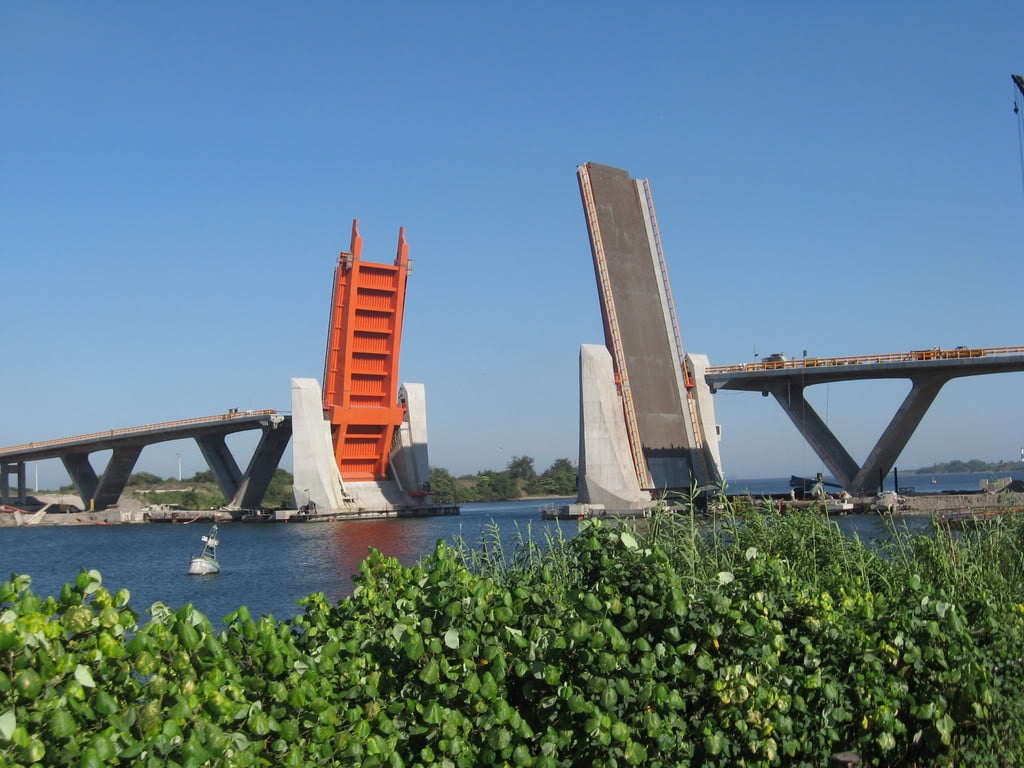
The bridge design It's a complex task carried out by specialized professionals; here's how it's done.
Bridges and Their Structural Design in 5 Phases
Bridges are among humanity's oldest forms of infrastructure, and for centuries they have served to connect towns and cities, or simply create new trade routes. Over time, construction has become more complicated, and the bridge design, as the spans of bridges become wider and the loads they bear grow heavier and more complex, there is a greater emphasis on aesthetic criteria such as slenderness, turning them into monuments for the most modern cities.
Before we dive fully into the calculation process, it’s worth clarifying exactly what we mean by a bridge: As many of us know, it is a horizontal infrastructure that Its sole purpose is to preserve one or more openings. The complex part is that its structure can more than withstand the vertical loads it is subjected to (constant traffic), the movement and vibrations that traffic may cause, wind gusts, and other natural phenomena; hence the difficulty and complexity of the task facing civil engineers when calculating and designing a bridge.
A clear example is the Chenab Bridge, in India, considered the world's highest railway bridge. Its design required extremely complex structural calculations to withstand wind loads, vibrations, and the constant passage of trains at high altitudes.
Without intending to oversimplify this task—and just to give you an idea of how complex it is—we present 5 phases engineers face when designing bridges:
1. Preliminary Studies
The first part of the process involves reviewing, together with all the professionals who need to be involved, all the factors that will determine the shape of the bridge to be designed for the project, in collaboration with geologists, architects, engineers, etc. Since when it comes to choosing the type of bridge to be built for the project All possible factors must be taken into account, which are not the focus of this post, but which we have developed in this previous article.
2. Preliminary sizing of cross-sections
Based on the structural typology selected as a result of the previous stage, we begin to determine the dimensions of that structure, starting with the different types of cross-sections that make up the bridge's design. The structural typology will also determine the calculation procedure to be followed. The following structural types exist:
3. Calculation of the elements
At this stage, the existing technical regulations in each region or country are used, where The oversizing is determined based on the safety factors to prevent disasters as much as possible.
4. Calculation of Forces and Stresses
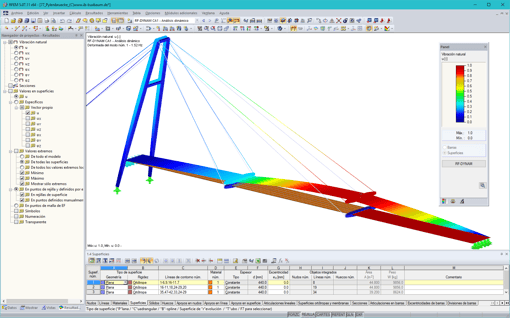
At this stage, it is necessary to break down the bridge into the various structural systems that define the structural system, for example, portal frames for columns, trusses, tension members, etc. By applying a structural analysis model to each one, we can thus obtain the efforts and tensions throughout the entire bridge structure.
When it comes to bridge foundations, they are almost as important as designing the bridge itself, so We've dedicated an entire blog post to this topic, which we recommend you visit.
5. Structural Inspection
At this stage Specific materials are assigned to each of the bridge's structural elements, allowing the mechanical properties of each material to be incorporated into the calculation, and thus verifying that the preliminary design complies with all the safety factors established in the technical codes. As in any of the previous stages, if something does not comply or is incorrect, one must return to the previous phase, making bridge design a iterative process.
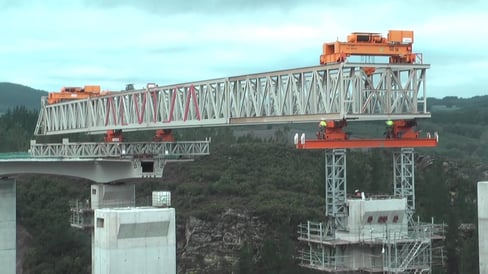
We can see that the phase of pre-design It is one of the most important steps and requires special attention, because without it, it is not possible to move on to the subsequent phases, and if there is any error or failure to comply in the process, that is where one must return to rethink or modify the bridge's design. It is clear that bridge design is a a very complex process that requires highly trained and specialized professionals on the topic.
If you're interested in developing your career as a professional specializing in structural analysis, we recommend checking out the Master's program in Structural Analysis and Design available at Structuralia.