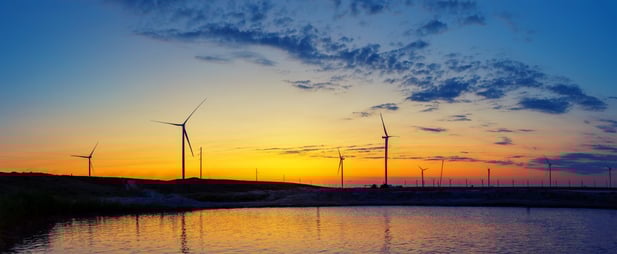
Do you know about one of the main sources of renewable energy that harnesses the power of the wind to generate electricity? That's right, we're talking about the wind energy, in which we have set aside a section for the new interview from «Structuralia Talks«.
We had the pleasure of speaking with Consuelo Alonso, Head of the Wind Energy Engineering and Construction Unit from Global Power Generation—Energy Group Naturgy.
Consuelo is an industrial engineer with more than 25 years of experience in the renewable energy sector in Spain, a trainer at various institutions, and Director of the Master's Degree in Sustainable Electric Power Generation in Structuralia.
As Head of the Wind Energy Engineering and Construction Unit at Global Power Generation (Naturgy). Could you briefly tell us about your current job and your career path?
«I started at the renewable energy sector in 1995, so right now I have more than 25 years of experience in the industry. Fortunately, I've been able to experience the entire cycle of renewable energy, with all its ups and downs, with a special a focus on wind energy.
As you might expect, over the years I've done everything from be part of projects, to the point of managing them, both in wind power and in photovoltaic: from site selection, resource assessment, and basic engineering, construction of wind farms and much more, both to both nationally and internationally.
Right now, I'm more focused on the initial phase of the project. Any wind power project must begin with a business plan, which evaluates wind as a source of revenue that will determine the project’s profitability. To do this, we use computational models and select a wind turbine based on the characteristics of each site.«.
We are very focused on energy for a variety of reasons. Do you think we're at a turning point when it comes to energy?
«I believe the world has been aware of this situation for several years now—a situation undoubtedly driven by climate change and all that this entails for citizens and governments. It is clear that a consumption model based on Relying on fossil fuels is not sustainable in the long term.
The The European Union is leading the shift in mindset, by investing resources and implementing regulations, because the reality is that Europe has neither oil nor natural gas. In terms of energy, it depends on third parties, and that is a problem.
If we add to all this the geopolitical situation Given the situation we are currently experiencing, we realize that we are, in fact, at a turning point; we must shift our energy production model toward a more sustainable one, based on renewable energy and decentralized, geared toward self-consumption.
In short, we have from now until 2050: The Target Year for Decarbonizing the Economy and do our part when it comes to self-consumption, electric cars, etc.«.
You have extensive experience as a trainer at various institutions. Can you tell us why you choose to pursue training as a complement to your professional work?
«I’ve been a trainer since 2010. It just happened naturally, because I’ve always enjoyed training. I filled in for a colleague at a conference, and as a result of that presentation, I was asked to become the director of a master’s program.”.
Since then, education has become, along with professional practice, my second calling, because I really enjoy it. It allows me to develop a new area of expertise, which requires a lot of dedication but undoubtedly enriches me greatly as a professional and as a person«.
Thanks to your experience as a trainer, you are in direct contact with professionals who are beginning or expanding their training in wind energy. What skills do you think are key to tackling the challenges the industry will face in the future?
«We’ve all heard the saying that we don’t even know what the jobs of the future will be today, and I agree. I experienced this myself when I started my career, and I can only recommend to professionals who are beginning or expanding their training that they never stop learning and that they do so with a strong spirit of dedication.”.
In addition, I would highlight the versatility as one of the key capabilities. For example, there is a lot of talk about the potential of the Big Data Applied to Renewable Energy. All those who, when the time comes, are able to ride that wave will be in a better position in terms of employability than those who lack training in the subject«.
Spain remains in fifth place in the ranking of the 30 markets that currently lead in offshore wind power generation. What do you think are the key aspects of this position?
«That's true; although there is room for improvement, we also can't ignore the fact that we've had, in Spain, one energy policy which has actively promoted renewable energy in general. For the past 25 years—since I started—despite various political ups and downs, it has been a priority sector for the economy, which is undoubtedly one of the key factors behind its fifth-place ranking.
Nor can we forget that Spain is a technological leader in the manufacture of wind turbines. All of their components—which contain many highly complex pieces of equipment—are manufactured and exported every year.
The third key factor behind this fifth-place finish is undoubtedly the excellent professionals that Spain has, along with major companies.
Ultimately, we have a supportive policy, highly skilled professionals, and the right technological support. We have a tremendous opportunity to harness the potential of offshore wind power«.
Australia, China, and the United States did not sign the idealistic COP26 agreement. Can the other countries commit to these agreements without the support of major nations?
«In 2015, the United Nations launched the commitments we must make to ensure a more just and sustainable planet by 2030—the so-called Sustainable Development Goals.
Among these objectives, which cover a wide range of areas, are those related to energy generation that involve businesses, government agencies, and citizens. Businesses—including oil companies—must demonstrate that they are sustainable in order to survive.
This global pressure, along with new generations that are much more environmentally conscious, will lead countries whose economies depend on oil—such as the United States—to eventually join forces«.
According to Red Eléctrica de España, wind power became the leading source of electricity generation in Spain last year, surpassing nuclear power. Do you think that, of all the renewable energy sources, wind power has the greatest potential in Spain?
«As everyone surely knows, Spain no longer relies on coal as an energy source, in accordance with EU guidelines. This has led to the use of other energy sources, such as wind power or solar power, so that they become the top items on the list.
Spain has an energy plan that is firmly committed to renewable energy. So firmly, in fact, that we must double our current capacity within eight years—a goal that will undoubtedly lead to continued growth in wind power in the coming years.
It is worth mentioning here that, in addition, offshore floating wind power is an area that still needs to be developed, which will further solidify its position as the primary source of energy generation.
That said, wind power has a long way to go, especially considering that In terms of performance, it will always be ahead of solar power«.
In closing… What do you think are the challenges your industry will face in the coming years?
«The World of the wind turbines It's unlikely that wind power will change, but we will see technological improvements in efficiency—for example, in areas with less wind.
As for the younger generations, My recommendation is that they focus on data analysis precisely to, improve the performance of wind turbines.
We must not lose sight of the fact that they are constantly collecting large amounts of data of all kinds, which can undoubtedly be turned into valuable information for technical improvements.
Furthermore, technological advances aren't the only important factor; costs must be reduced, because otherwise other renewable energy sources—such as solar power—could gain the upper hand over wind power.
»Finally, with regard to new professionals, it is important for training institutions and companies to maintain direct and close contact so they can stay informed about new job requirements—not only for engineers but also for other roles—to ensure there is no gap between what the industry needs and what training institutions offer.".
From Structuralia We would like to thank Consuelo the opportunity to conduct this interesting interview, which has brought us a little closer to the the world of wind energy and its possibilities.