The concrete It is undoubtedly one of the most widely used and versatile materials in the construction industry. Its strength, durability, and adaptability make it the foundation of countless civil engineering projects, from homes and bridges to tunnels, dams, and large-scale buildings.
Over time, various types of concrete have emerged, each with specific characteristics tailored to the intended use or site conditions.
In this article, we'll show you the main categories of concrete, their properties, and the practical applications of each type. Pay close attention and find out which type of concrete is best suited for your next project!
What is concrete?
The concrete, is a building material composed mainly of cement, water, aggregates (gravel and sand) and, in many cases, special additives that improve their properties.
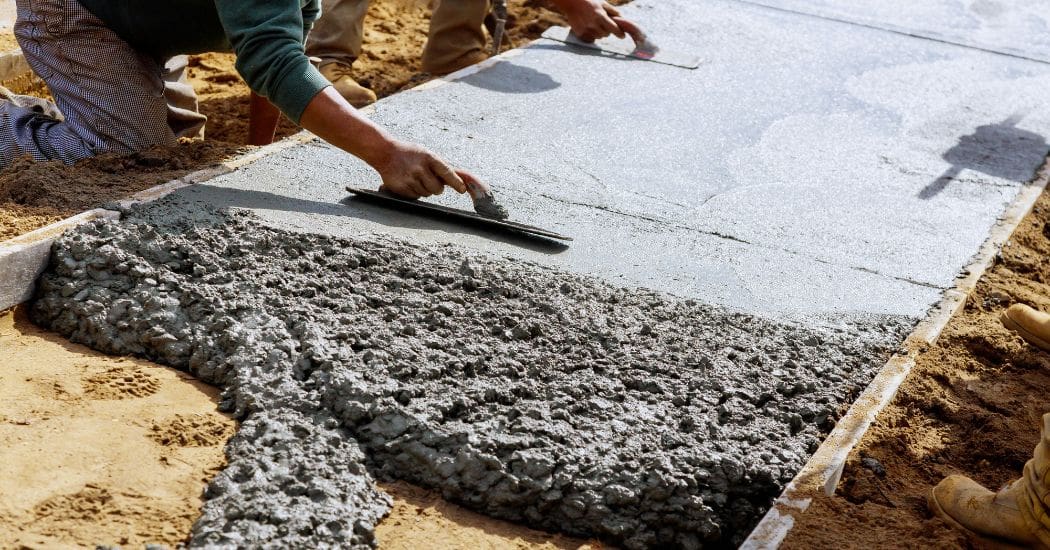
This mixture forms a solid, durable mass capable of withstanding heavy loads. The strength of the concrete will vary depending on the proportions of the materials; the more liquid added, the easier it will be to work with, but it will also be less strong. The result is a grayish material that, as it hardens, combines compressive strength, weather resistance y structural adaptability, which makes it the backbone of most works.
Classification of Concrete Types
Now that you know the main components of concrete, we’ll show you the different types of concrete based on various factors such as density, function, composition, or specific use.
Based on their structural function
Structural Concrete
It is a type of concrete specifically designed to withstand heavy loads and safely transfer them to a building's foundation. It is the essential material in the construction of the main structure of buildings, bridges, dams, and other infrastructure.
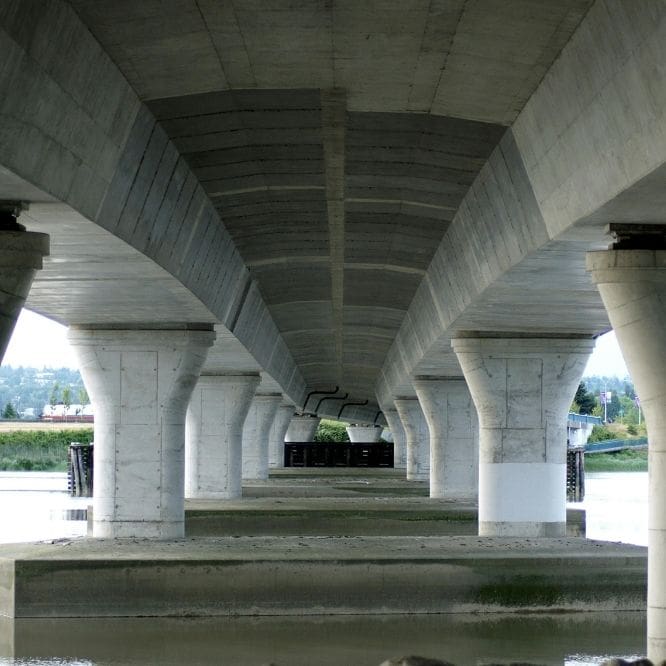
The main characteristics that make structural concrete indispensable in construction are:
- High compressive strength: Its ability to withstand heavy loads without deforming makes it indispensable in construction.
- Durability: It is resistant to corrosion, weather conditions, and chemicals, thereby ensuring a long service life for the structures.
- Versatility: It can be adapted to different shapes and sizes.
- Adhesion to steel: It adheres very well to steel bars, which is crucial in reinforced concrete (a type of structural concrete that incorporates steel reinforcement to improve its tensile strength).
Non-structural concrete
Unlike structural concrete, the purpose of this type of concrete is not to provide strength, but rather to fulfill filler functions, leveling, protection, isolation o aesthetic design. Although their main function isn't to provide resistance—just because—they do exist specialty concretes that are used in other applications:
- Greater flexibility: It is usually easier to work with, which makes it ideal for shaping into different forms and volumes.
- Fill Function: It is ideal for filling gaps, leveling surfaces, or adding volume to non-load-bearing elements.
- Variety of finishes: It can be adapted to different textures, colors, and decorative finishes.
- Lower cost: It is generally more affordable than structural concrete due to its strength-to-weight ratio and, often, its simpler composition.
Based on their density
Lightweight concrete
Lightweight concrete is a type of concrete that is distinguished by having a significantly lower density than conventional concrete. While conventional concrete typically weighs between 2,000 and 2,400 kg/m³, lightweight concrete has a density of less than 2,000 kg/m³, and can even be lower than that.
But how can you reduce the density of an object that, at first glance, appears to be heavy? The key lies in its composition, particularly in the aggregates that are used or in the incorporation of air into the mixture.
Regular concrete
The density of conventional concrete ranges from 2,000 kg/m³ and 2,600 kg/m³. This density is achieved by using standard-weight aggregates, such as gravel, sand, and crushed stone, which are the main components that provide volume and mass to the mixture. Unlike the lightweight concrete (which uses low-density aggregates or air-entrained concrete) and the high-density concrete (which uses high-density aggregates such as barite or magnetite).
Heavy concrete
The primary and most sought-after property of heavy concrete is its high density, which can range from 2,600 kg/m³ to over 6,000 kg/m³, and can even reach 8,000 kg/m³ or 9,000 kg/m³ in very specific cases. This gives it unique capabilities:
- Radiation shielding.
- Counterweight and ballast.
- Sound insulation.
Based on its composition/additives
Reinforced concrete
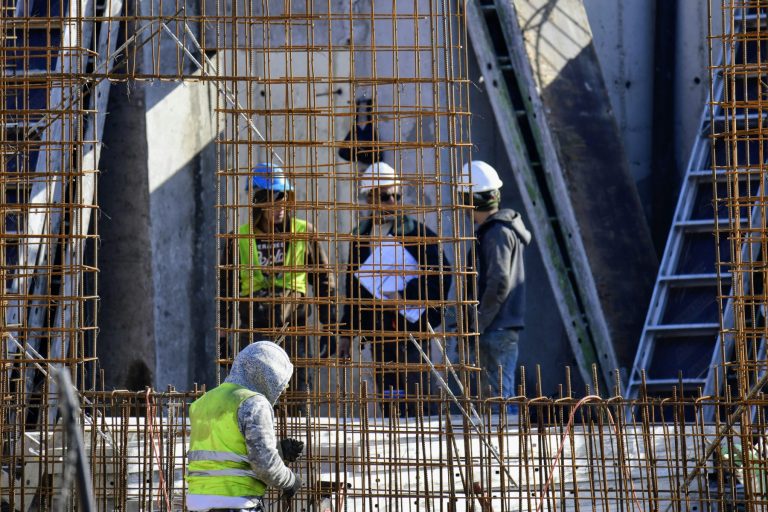
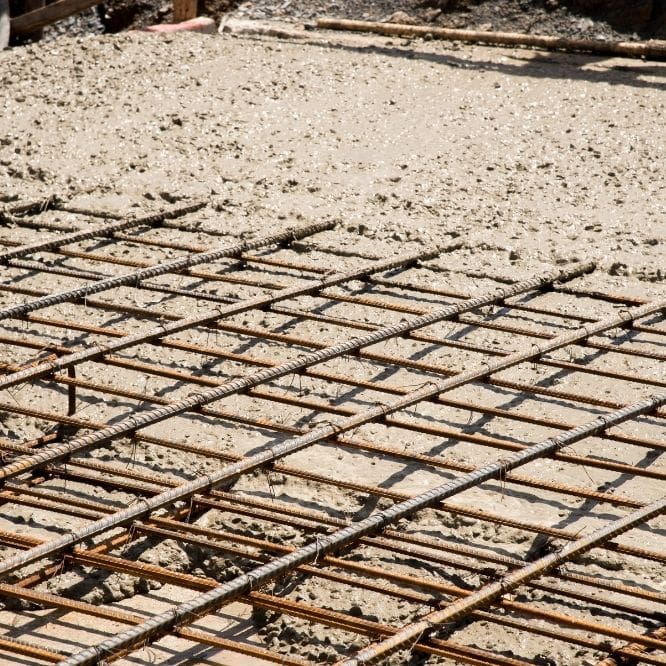
The reinforced concrete is composed of the ordinary concrete (or sometimes lightweight or heavyweight concrete, depending on the application) and bars or mesh made of rebar (known as armor).
One of the main advantages of this combination lies in the bond between concrete and steel. As the concrete hardens, it bonds firmly to the steel bars, ensuring that both materials work together as a single unit. In addition, the concrete protects the steel from corrosion and fire, which increases the structure’s durability and safety.
Prestressed concrete
This type of concrete is produced using a technique based on a pre-compression (as if you were compressing it before the actual load is applied) so that it can better withstand those tensile forces that would normally cause it to crack.
Shotcrete
Imagine you need to cover an uneven surface, such as a rock face, the inside of a tunnel, or even repair a structure. What type of concrete could be applied quickly and efficiently? The answer is the shotcrete!
As its name suggests, shotcrete is shoots at high speed from a nozzle onto a surface. As it is sprayed out, it strikes the surface and compacts in place, creating a dense, strong layer. There are two main methods for spraying concrete:
- Dry method:
- The cement and aggregates (sand and fine gravel) are mixed together dry.
- This dry mixture is transported by compressed air through a hose to the nozzle.
- At the nozzle, pressurized water is added just before the mixture is sprayed out.
- Wet process:
- Concrete or mortar that has already been mixed with water (and sometimes with accelerators) is pumped through a hose to the nozzle.
- Pressurized air is fed into the nozzle to provide the necessary velocity for spraying, and setting accelerators can be added if the material needs to harden very quickly (for example, to stop a water leak).
In addition to these techniques, there is an innovative solution specifically designed to improve the placement of material in complex elements or those with a high reinforcement density: the Self-compacting concrete. This type of concrete is characterized by its ability to flow and compact on its own, without the need for vibration, ensuring uniform filling, excellent surface quality, and reduced construction time.
Depending on its specific use
So far, we have discussed concrete as a sturdy and functional material—the “skeleton” of buildings. But concrete can also be incorporated into architectural and landscape design.
Decorative Concrete
Decorative concrete is, essentially, concrete that has been modified or treated on its surface (or throughout its mass) to achieve a aesthetic finish in particular, which can mimic other materials or create unique designs.
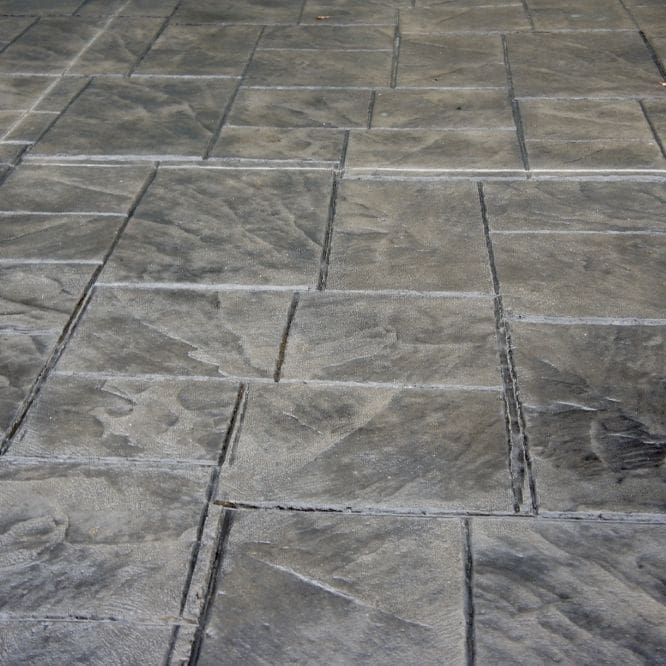
Let's see how decorative concrete can be applied:
- Stamped concrete: The concrete is poured, and patterns are «imprinted» on it using special molds to mimic wood, stone, brick, etc. It is very popular for outdoor areas such as patios, sidewalks, and driveways.
- Polished concrete: Once it has hardened, the surface is sanded and polished until it achieves a sheen similar to that of marble or terrazzo. Ideal for modern interiors and large areas.
- Exposed or deactivated aggregate concrete: The gravel or stones in the mixture are exposed on the surface, creating a rough, natural texture.
- Pigmented concrete: Color is added directly to the mixture to achieve a uniform shade throughout the concrete mass.
- Microcement: A thin cement-based coating applied to existing surfaces, creating a seamless, modern finish.
Recycled concrete
The recycled concrete is one in which some or all of the aggregates (gravel and sand) come from the demolition or recycling of concrete structures and other construction and demolition waste (CDW). Instead of using natural aggregates extracted from quarries, concrete rubble is crushed and processed to produce new aggregates.
Learn more about recycled concrete and its environmental benefits.
Translucent concrete
How is it possible for a cement-based material to let light through? Translucent concrete challenges the notion that this material is always opaque: it incorporates optical fibers into its mass to channel light, creating striking visual effects and enhancing the natural lighting in any space.
It is manufactured by incorporating optical fibers (usually made of glass or polymer) within the concrete mix. These fibers are evenly distributed throughout the mass. Since optical fibers conduct light, when light strikes one side of the concrete panel, it is transmitted through the fibers and emerges on the other side, creating points of light or even revealing silhouettes and colors.
What makes it special?
- Light Pass: It allows light (natural or artificial) to pass through the material, creating a sense of lightness and visual connection.
- Aesthetic effects: It can create patterns of light and shadow, or reveal the silhouette of what lies behind it, adding an artistic and dynamic element to the structures.
- Energy savings: By allowing natural light to enter, it can help reduce the need for artificial lighting during the day.
- Durability: It maintains the mechanical properties and strength of concrete, although the strength may be slightly lower than that of normal concrete due to the inclusion of fibers.
Learn about other types of concrete
- Self-healing concrete: It contains microcapsules that release additives when cracks appear, repairing them on their own. Find out how it works in “Is the nearly perfect self-healing concrete?”.
- Slurry concrete: an initial layer that protects and prepares the surface before the main pour. Its benefits, such as improving adhesion and reducing leaks, are detailed in the article on Cement Slurry: Benefits and Uses.
Most Common Applications by Concrete Type
After learning about the different types of concrete, it is important to understand their functions, since choosing the right type affects both the durability of the structure and its practical application.

Now that you know the different types of concrete, it's time to choose the one that's best suited for your project! Take your expertise to the next level with the Master's Degree in Highway and Road Construction and Maintenance from Structuralia and is an expert in advanced concrete techniques for infrastructure.