
The change in cement proportions They can create different types of materials, such as finishing mortar, adhesive mortar, or concrete.
Cement is one of the most versatile materials available in the construction industry, Its applications are virtually endless since it is a fundamental component of various types of mixtures, always combined with water. Because it has this “malleable“ quality, it can take the shape of almost any object, serve as a binder, or even smooth out any surface, always depending on the proportions of cement in the mixture.
Function of Cement
Cement is a binder consisting of a mixture of limestone and calcined clay, which can harden after coming into contact with water; not to mention that it contains a small amount of plaster. The consistency or workability of the cement will depend on the amount of water added to the mixture, and the properties of the mixture will also depend on the various aggregates used in it.
Types of Cement
- Ordinary Portland cement: By far, it is the most common type of cement used in civil construction; it is manufactured and used around the world, is very affordable, and has excellent properties for construction.
- Portland Pozzolan Cement: It is very similar to ordinary Portland cement, but it has properties that make it more resistant to external environmental factors such as water. That is why it is widely used in marine structures, sewer systems, foundations, docks, and bridges.
- Quick-setting cement: constructions are used or spills that require rapid setting, widely used in construction.
- Blast furnace slag cement: is a Clinker which is mixed with 60 % slag and yields properties similar to those of Portland cement, but is more It's inexpensive to manufacture.
Cement Mixes and Proportions
Mortar
It is a mortar made by mixing cement, sand, and water. It has excellent adhesive properties and is used primarily for Install ceramic bricks (Hollow blocks or partition blocks) or precast concrete blocks. The mixture should be liquid enough to be applied with a trowel and for masonry work, but not so stiff that it cannot be worked.
The proportions for the mixture are as follows:
-
- 1 bucket of clean water
- 1 25-kg bag of cement.
- 4 bags of screened sand.
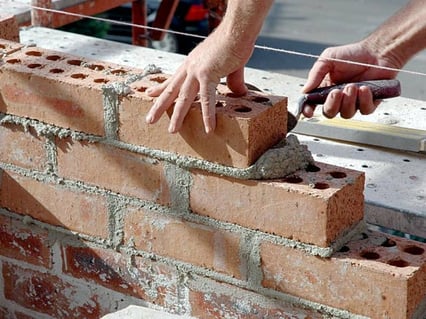 Masonry wall built with mortar. Source: DIY.facilisimo
Plastering Mortar
Cement mortar is also used to plaster or finish masonry walls or ceilings—that is, those built with ceramic bricks, made of clay insulation or precast concrete blocks. In these cases, the mixture is different, since the goal is to achieve a smooth finish that does not crack; therefore, the mixture is made more liquid.
The proportions for the mixture are as follows:
-
- 1 bucket of water
- 1 bag of Portland cement, 25 kg.
- 2 bags of screened sand
- 2 bags of live sand.
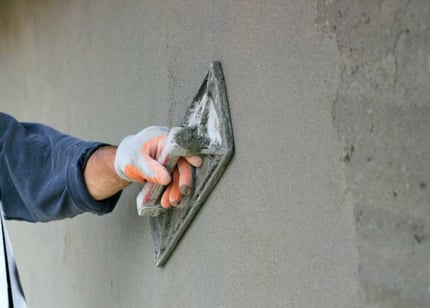 Mortar plastering. Source: Rodacal.com
Concrete
Concrete It is the most commonly used mixture with cement. Its high compressive strength makes it an indispensable material in the construction industry; furthermore, it is very versatile and can be combine with other materials such as steel to significantly improve its performance.
In the case of concrete, there are many types of mixtures that are produced by varying the proportions and types of the materials used, in order to to obtain different properties for different applications. The proportions of the most common concrete mix are as follows:
-
- 1 part cement
- 3 parts sand (from a quarry or crushed stone)
- 4 parts gravel
- 0.5 parts water
Concrete mixes with more water are easier to work with because their consistency, but on the other hand, they lose their mechanical strength. On the other hand, concrete mixes may contain additives to accelerate setting, improve workability, increase strength, or even make the concrete water-repellent.